























Escape room & theme park props
Are you planning to create an immersive entertainment space that brings visitors into another world? For example, how about recreating an ancient Egyptian tomb, where hieroglyph-covered sarcophagi line the dusty walls? Or perhaps a spaceship hurtling into a black hole? A scenario alone isn’t enough: you need a realistic environment that can be touched and explored. The difference between a memorable adventure and simply an “unusually furnished room” lies in the escape room props.
Custom escape room props and theme park props serve as more than decoration. They’re interactive storytelling tools that create lasting memories, and atmospheric elements establish mood and era. And Royal Foam Art Design knows the secret to making these items as realistic as possible without having to spend “all the money in the world”.
Why EPS foam excels for escape room & theme park props
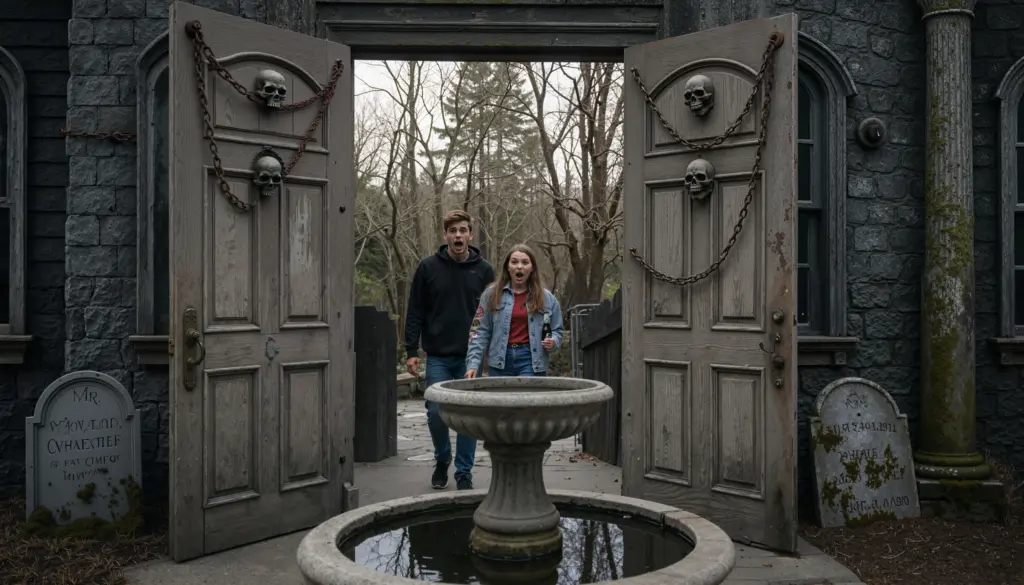 Props in immersive spaces don’t just “sit there” – visitors constantly interact with them. In escape rooms, guests search for clues, keys, and secret doors. It means, everything in the room is guaranteed to be touched (and sometimes will even be knocked on). Props in theme parks are sure to be touched, especially by children.
Therefore, these elements require materials that balance a variety of competing requirements. Traditional materials aren’t always suitable. For example, plaster is too fragile, and wood risks not withstanding temperature and humidity fluctuations. Expanded polystyrene foam is a different story. It changes the rules of the game and makes life easier for both the founders and employees of entertainment spaces.
Lightweight for rapid setup and reconfiguration
Escape rooms operate on tight schedules. Between groups, staff have minutes to reset the setup: checking props, repositioning elements, and ensuring everything is working perfectly for the next group. Heavy props slow down this process, limit flexibility, and exhaust staff. Lightweight foam escape room props move effortlessly, allowing quick resets and efficient operations.
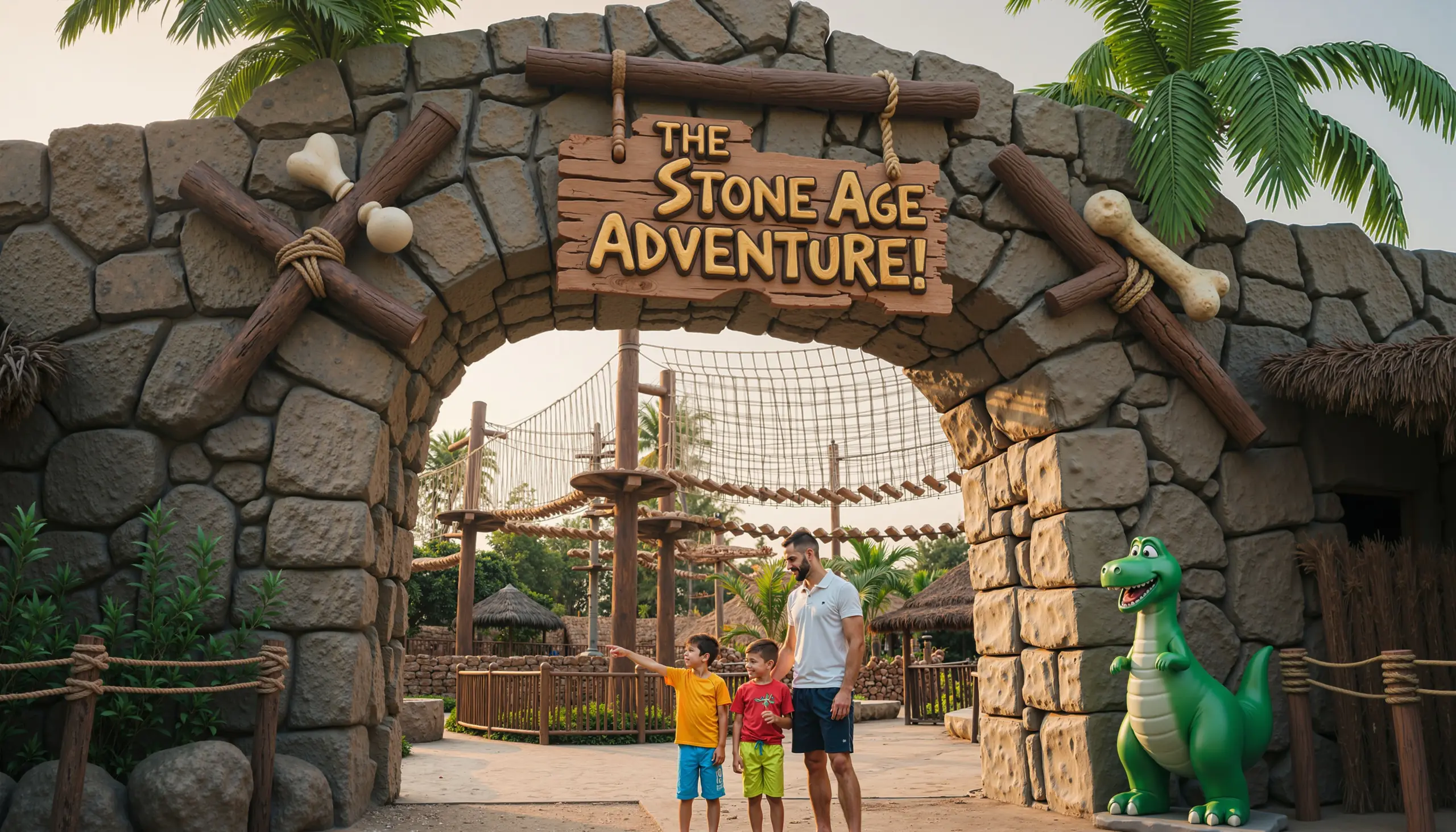
Theme parks face similar demands when rotating seasonal attractions or updating areas. A Halloween haunt transforms into a holiday wonderland, then shifts to a spring celebration. Theme park foam props that two staff members can relocate enable this flexibility. The EPS weight advantage means that ambitious seasonal programs don’t require prohibitive labor costs or installation times.
Finally, foam props are easy to move between venues (for example, from one corner of the park to another or between escape room branches). They’re also much easier to store: resistant to moisture and temperature fluctuations, polystyrene foam items can be stored perfectly even in a basement. The structure of interconnected, closed cells prevents moisture from penetrating – and your luxurious, thoughtfully crafted decorations won’t get damp, even in rainy weather.
Uncompromising durability for constant interaction
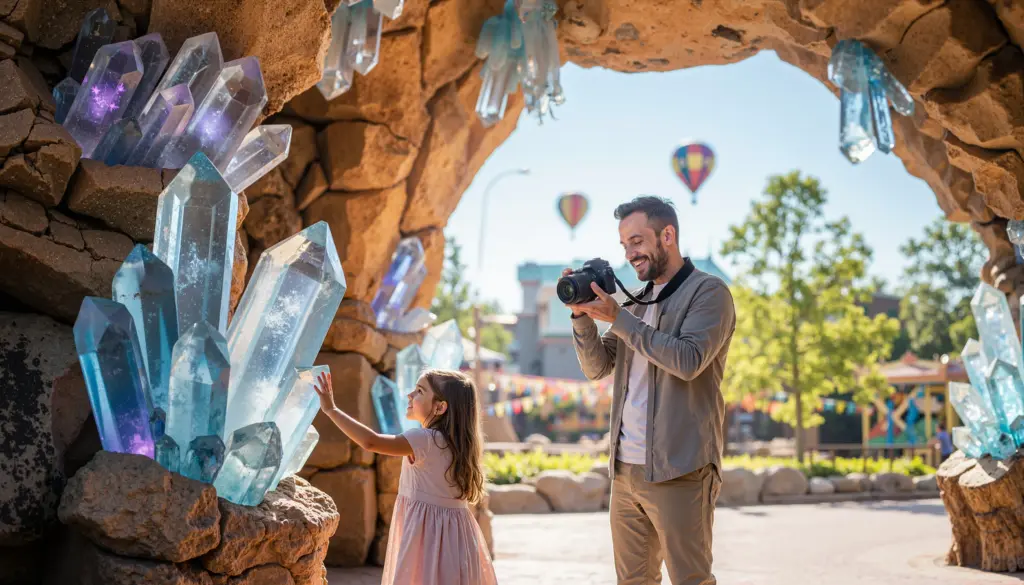 “Don’t touch” sign defeats immersive entertainment’s entire purpose. Guests need to open the treasure chests, press the buttons, pull the levers, and examine the artifacts. Every escape room prop gets handled hundreds or thousands of times. Theme park elements endure even longer years of continuous visitor interaction in outdoor conditions.
Carefully crafted foam props withstand such stress remarkably well. Hard protective coatings create durable surfaces that don’t chip, crack, or show wear like painted wood or plaster. The foam core absorbs impacts that would damage hollow fiberglass. Props maintain appearance through seasons of heavy use without requiring constant repair or replacement.
This durability extends to structural integrity. Thanks to a special urethane coating, the prop does not weaken, warp, or deform from heat, cold, or UV rays, and does not deteriorate over time. Joints between blocks in complex structures remain strong, and surfaces remain smooth.
Safety that protects guests and their responsibilities
Immersive environments encourage enthusiastic interaction. Guests pull harder than expected, push where they shouldn’t, occasionally lose balance, and grab whatever’s nearby. Lightweight foam props ensure guests’ safety (and reduce stress for the operators). If something falls, it won’t cause serious injury. This is especially important for family attractions, where children actively explore and adults relax, knowing the environment won’t harm their kids.
High-quality foam stage props have no sharp edges. Everything has smooth curves or transitions. “Dangerous” props, such as swords or spikes, look threatening but feel safe to the touch. So, operators avoid nightmare scenarios where guests require medical attention due to overly realistic props causing real-life harm.
Finally, foam theme park and escape rooms props are treated with fire-retardant coatings and meet building codes for event spaces, theaters, and entertainment venues. This compliance isn’t optional – it’s legally required and practically essential for insurance and permitting.
Cost-Effectiveness that enables complete environments
Budget determines scope. With traditional materials, prop costs force difficult choices: furnish one room elegantly or multiple rooms sparsely? Include key pieces or comprehensive environments? Buy theme park props or theme park stage props, but not both?
The affordability of foam changes these trade-offs. Entertainment operators can more often say yes to additional props, more detailed locations, and spare parts that can be replaced and serviced.
This cost advantage compounds when considering replacement cycles. Traditional props need replacing after heavy use. EPS foam props last longer and reduce lifetime costs further. The initial savings multiply through extended service life and minimal maintenance requirements.
Rapid production for the entertainment industry
Entertainment operates on fixed deadlines. Theme parks announce summer attractions months in advance, setting opening dates. Escape room companies plan grand openings and begin marketing before build-outs are complete. Props must be ready when needed – delays affect all projects, potentially forcing postponements that damage reputations and revenue.
Foam manufacturing enables the entertainment industry to meet deadlines. The time from approved design to finished prop is typically 4-8 weeks, compared to the 12-20 required with traditional materials. This speed allows for late-stage design decisions, change requests to be handled without disrupting schedules, and ensures opening day readiness.
Rapid prototyping is invaluable during the design phase. Need to test whether an escape room puzzle mechanism works intuitively? Create a prototype quickly, test with users, refine based on feedback, then produce the final version – all within timeframes that don’t delay overall projects.
What can be created: a wide range of theme park and escape room props
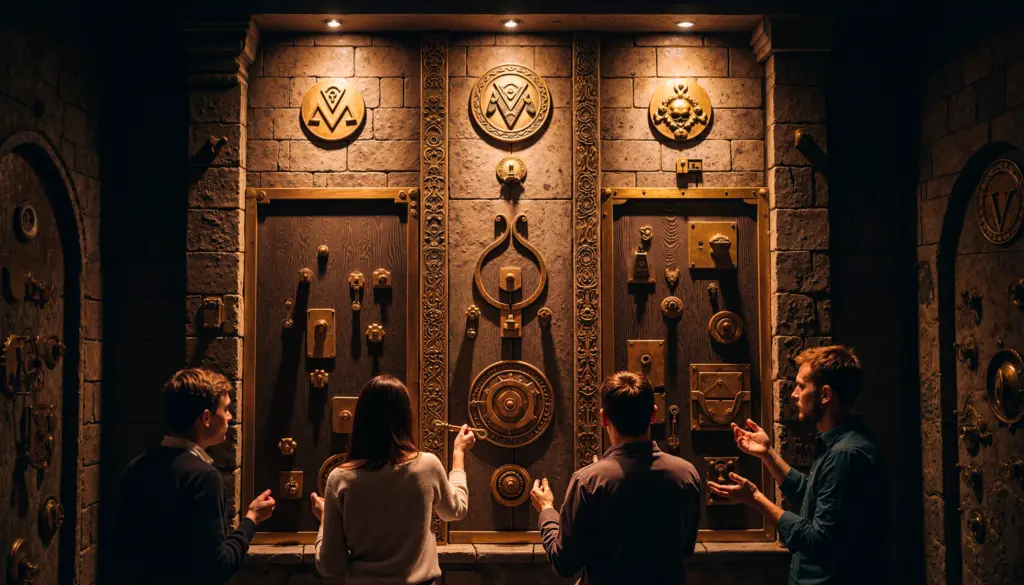 The question isn’t what can be made, but rather what your story needs. EPS foam fabrication allows us to create virtually any prop, from intimate objects you can hold in your hands to monumental architectural elements. Here are just a few of the most popular examples.
Ancient artifacts and historical objects
Historical and archaeological themes dominate escape room concepts and theme park attractions. This means treasure chests of all kinds, authentically aged with the texture of worn wood, are a must.
Ancient clue signs can also be made from expanded polystyrene: any writing or image can be engraved on the items.
In general, these can be any objects, both important to the quest story and making the atmosphere: all kinds of bowls, jugs, swords, or armor. Museum-quality surface treatment creates an aged look and authenticity of the materials.
Futuristic technology and sci-fi gadgets
Control panels and consoles form the backbone of sci-fi escape rooms. Blinking lights, pressable buttons, switches with appropriate resistance, information screens – these interactive elements must appear complex enough to feel realistic, yet durable enough to allow endless guest interaction. Foam construction allows for built-in lighting, working switches, and realistic textures without the expense of housing real electronics.
Architectural elements
These are essential for a more immersive escape room experience or theme park pastime. The ease of foam processing allows for the recreation of any desired structure:
- ancient temple doorway covered in hieroglyphics;
- high-tech gateway with mechanical parts;
- medieval castle gates with iron reinforcement imitation;
- columns, posts, and supporting elements;
- industrial support faux beams;
- tree trunks for creating forest landscapes;
Despite their impressive scale – often 8-12 feet tall – their foam construction makes them easy to set up and store.
Escape room puzzle components and mechanisms
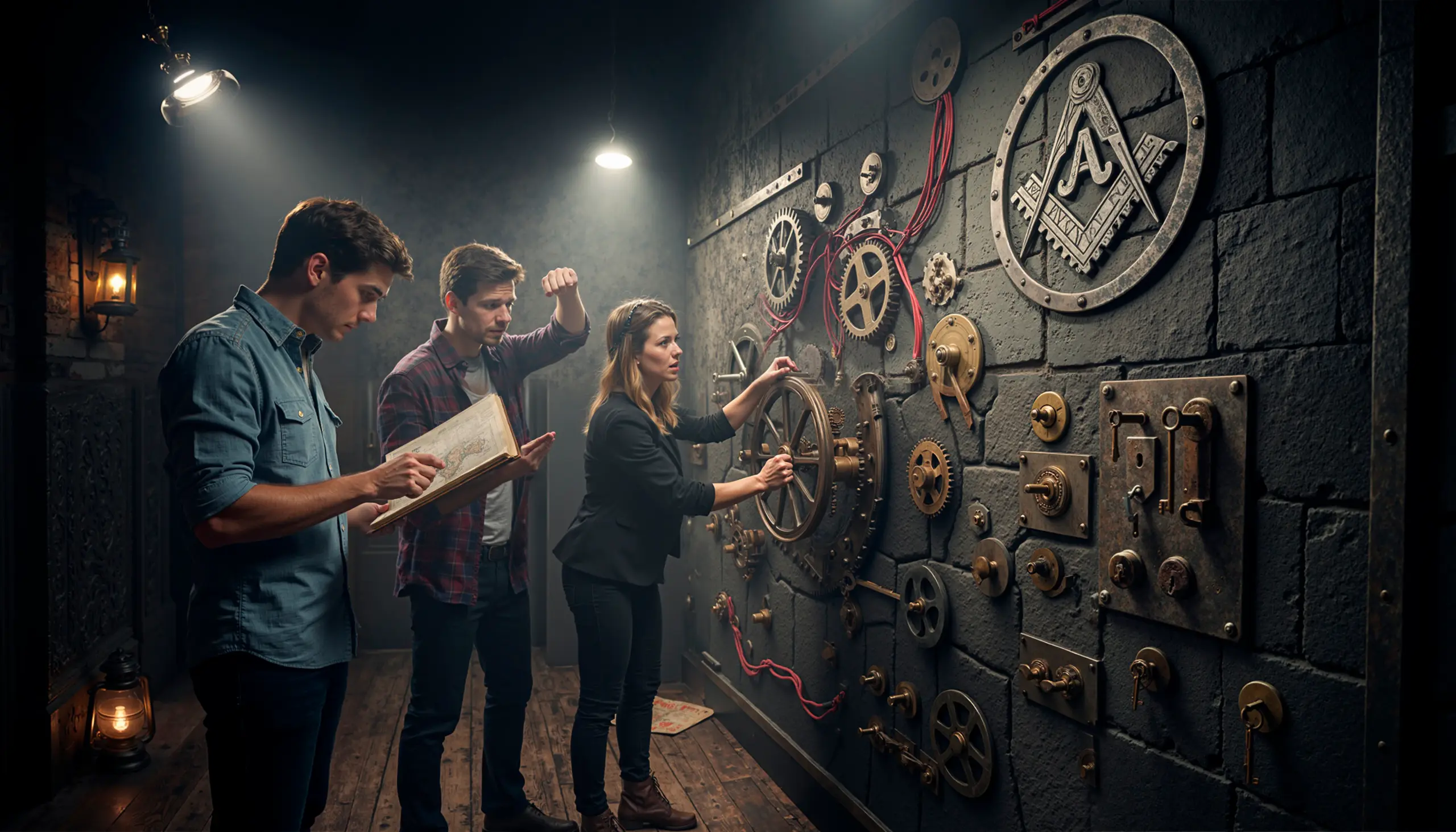
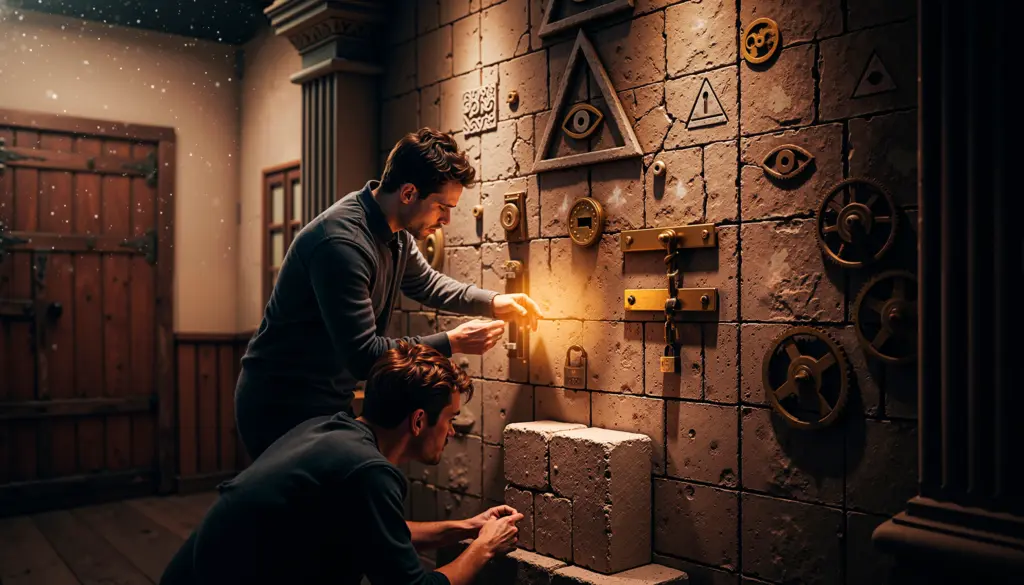
There are controllable mechanisms that escape room guests rotate, slide, align, or arrange to create engaging tactile puzzles:
- gear mechanisms rotate with a satisfying resistance;
- stone wheels with matching symbols;
- sliding panels reveal hidden compartments;
- hidden compartments and secret doors give guests long-awaited “aha!” moments.
- books that open to reveal hollow interiors etc.
These mechanisms must be durable enough to withstand incorrect attempts and precise enough to provide clear feedback when solved correctly.
Character sculptures and figurines
Characters populate immersive spaces, creating atmosphere or interactive storytelling elements:
- Life-size character figurines – heroes, villains or non-player characters);
- Fantasy creatures and monsters
- Costume-ready mannequin figures.
Photo booth props
Theme park items specially designed for photo ops transform guests into brand ambassadors. These installations don’t advance the narrative, but rather create shareable content:
- dramatic throne where visitors pose like royalty;
- spaceship cockpit for commander photos;
- giant creature creating scale contrast.
Interactive elements along queue routes
Mechanisms for manipulation, details to explore, photo opportunities. Each interaction takes a few minutes, psychologically breaking up the long wait into shorter segments.
Props in each zone mentally prepare guests for the experience ahead. For example, the queue for the ‘space” attraction passes through the mission control center, equipment storage, and landing zones.
Seasonal and rotating theme park attractions
The main structural elements remain unchanged year-round, while swappable props change their appearance and theme. The castle’s façade can be decorated with autumn leaves and pumpkins in the fall, then covered in snow and icicles in the winter, then blooming with spring flowers, and then adorned with festive banners in the summer – all by adding props rather than completely rebuilding. The cost-effectiveness of foam makes it possible to purchase several seasonal prop sets where expensive traditional materials force a choice.
Why Royal Foam Art Design for escape room & theme park props
 Professional immersive entertainment demands props that combine theatrical impact with operational reliability. Creating pieces that are visually stunning and function flawlessly requires specialized expertise that generic manufacturers simply don’t possess.
Unique professional proficiency
Royal Foam Art Design’s experience in entertainment means an intuitive understanding of these requirements. Over nearly 25 years in the market and numerous entertainment projects, we’ve studied which escape room props are most susceptible to wear and tear. We understand which theme park elements are exposed to weather conditions. We anticipate how guests interact with various prop types. This knowledge helps guide design decisions, preventing problems rather than requiring rework.
Efficient production for complete environments
Designing entire escape rooms or large theme park areas requires production facilities that ensure quality throughout their entire lifespan. We have just the right facilities: our foam production is the largest in Jacksonville.
Streamlined workflows allow us to produce multiple props simultaneously without bottlenecks. Efficient material usage keeps costs predictable.
Support from concept through opening
The best props are born from collaboration throughout the entire project cycle. Royal Foam Art Design offers support beyond production, from initial concept development and installation guidance to ongoing operational consultations:
- Design phase consultation helps translate creative visions into buildable, durable, budget-conscious props. Collaborating early prevents problems such as structures that are too fragile, too expensive, or too complex to meet deadlines.
- Installation guidance and support ensure the props are correctly positioned, securely fastened, and functioning properly. While most foam props install easily, complex sets benefit from fabricator input. Knowing how the parts were manufactured determines optimal installation approaches.
- Modifications and updates become necessary as attractions evolve. An escape room puzzle proves too difficult and needs prop changes. A photo opportunity becomes so popular it needs reinforcement. Ongoing relationships mean these changes happen efficiently with parties already familiar with existing work.
“Where to buy escape room props” question shouldn’t be purely price-driven. The lowest cost often means the lowest quality and the highest operational headaches. The best value comes from props that cost reasonably while performing reliably, requiring minimal maintenance, and lasting years rather than months. This cost-per-use calculation favors quality fabrication from experienced providers.
Our craftsmen at Royal Foam Art Design are capable of creating just such props. We’ll help you bring your seemingly impossible ideas to life. Call or email us to place an order: let’s fill this world with new impressions & experiences together!