Custom Holiday & Seasonal Decor: Reusable Seasonal Environments Built for Visual Impact, Fast Deployment, and Long-Term Value
Seasonal Decor as a Commercial Revenue Tool
Holiday and seasonal decor is not just “temporary decoration.” For malls, hotels, retail brands, municipalities, event venues, theme attractions, corporate campuses, and public-facing destinations, seasonal design is a revenue tool. It changes how people move through a space, where they stop, what they photograph, how long they stay, and how strongly they remember the location. A strong Christmas village, winter photo-op, Halloween entrance, spring garden display, Valentine’s installation, Easter scene, patriotic summer feature, or branded seasonal centerpiece can turn ordinary traffic into measurable engagement.
The challenge is that seasonal decor has to do several things at once. It must be large enough to attract attention, light enough to move quickly, durable enough for public use, refined enough for photos, weather-resistant when placed outdoors, and practical enough to store and reuse. Traditional materials can create beautiful effects, but they often bring weight, freight cost, long installation windows, difficult repairs, and storage headaches. EPS foam with polyurea hard coating solves many of those problems because it gives designers scale without forcing the project into heavy construction.
Types of Custom Seasonal Assets
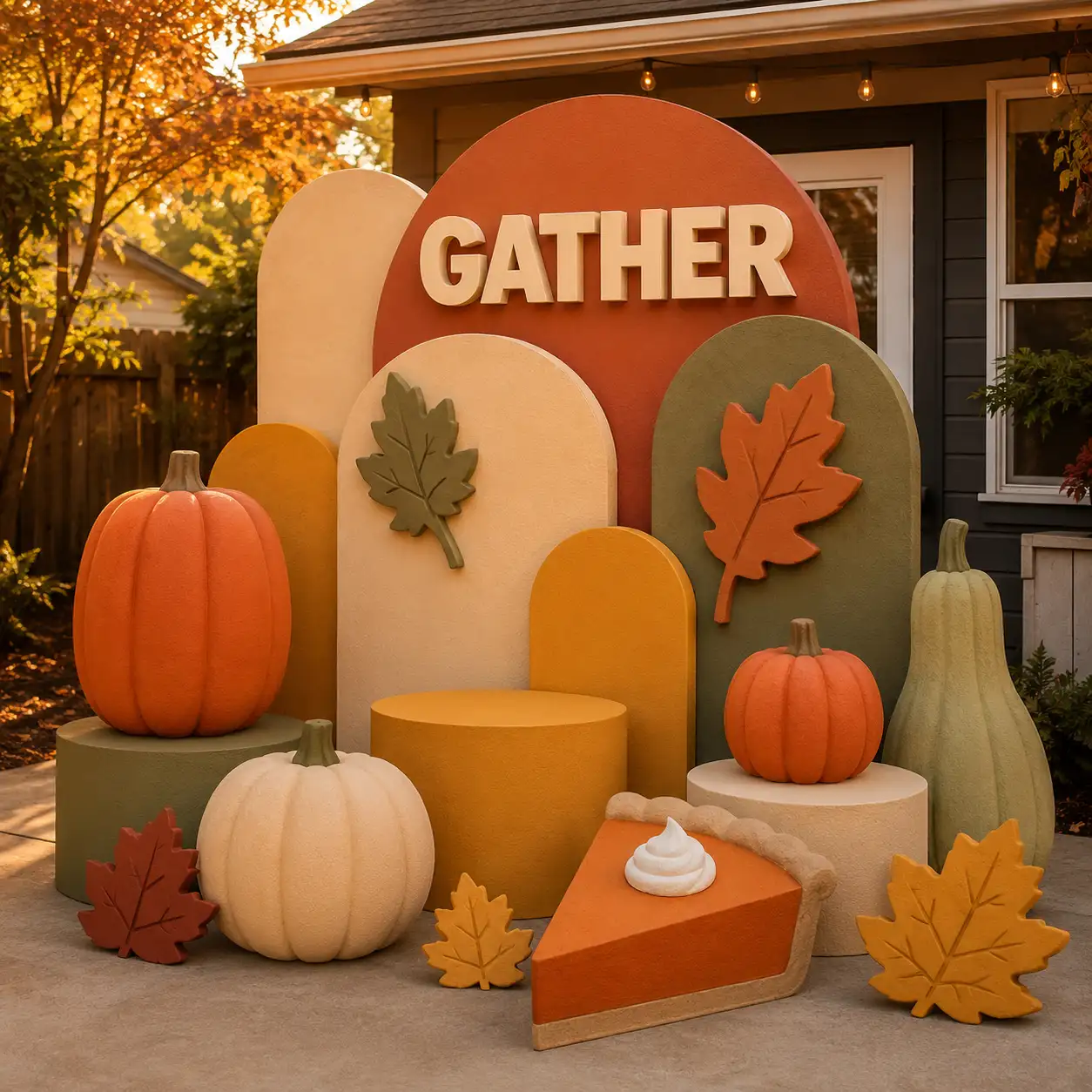
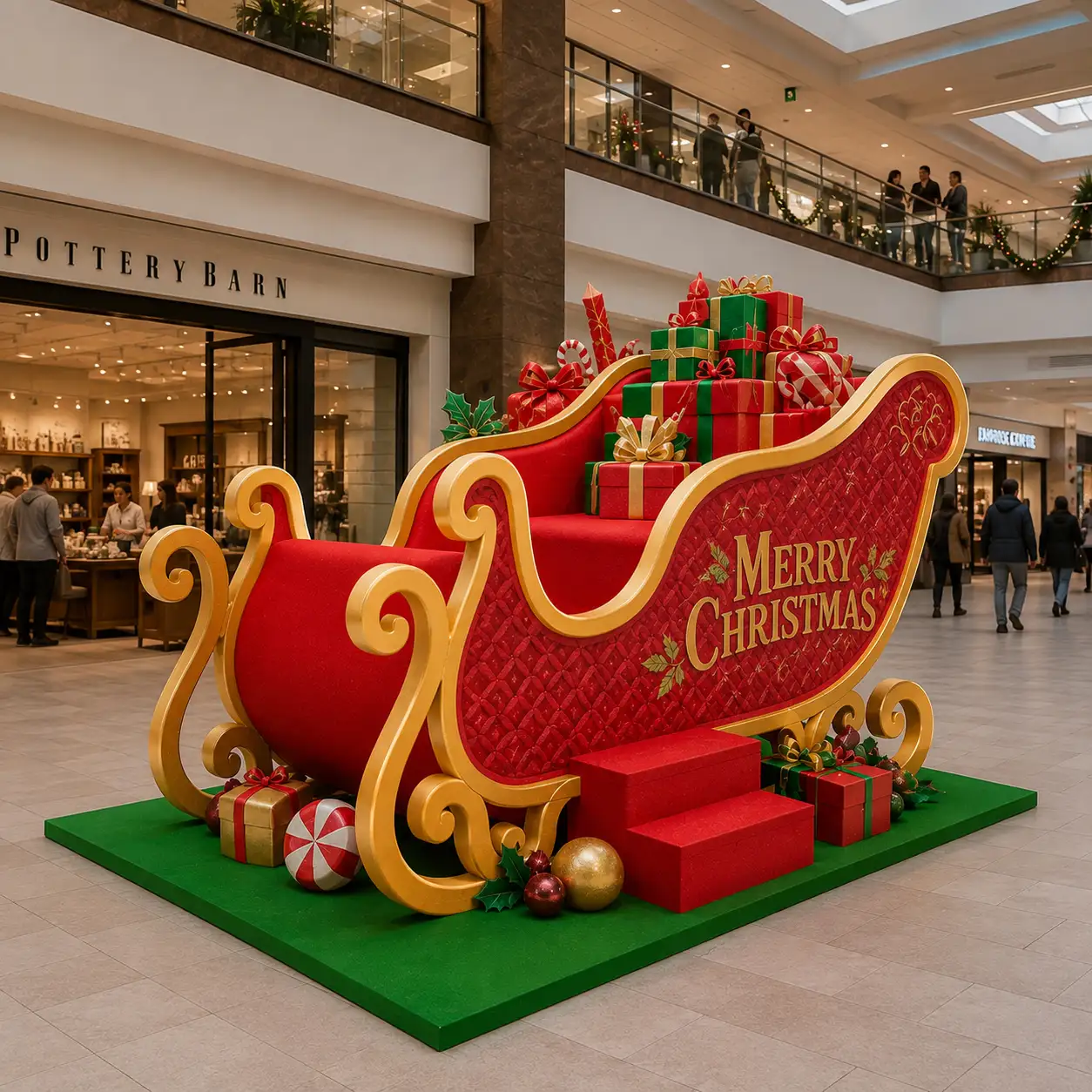
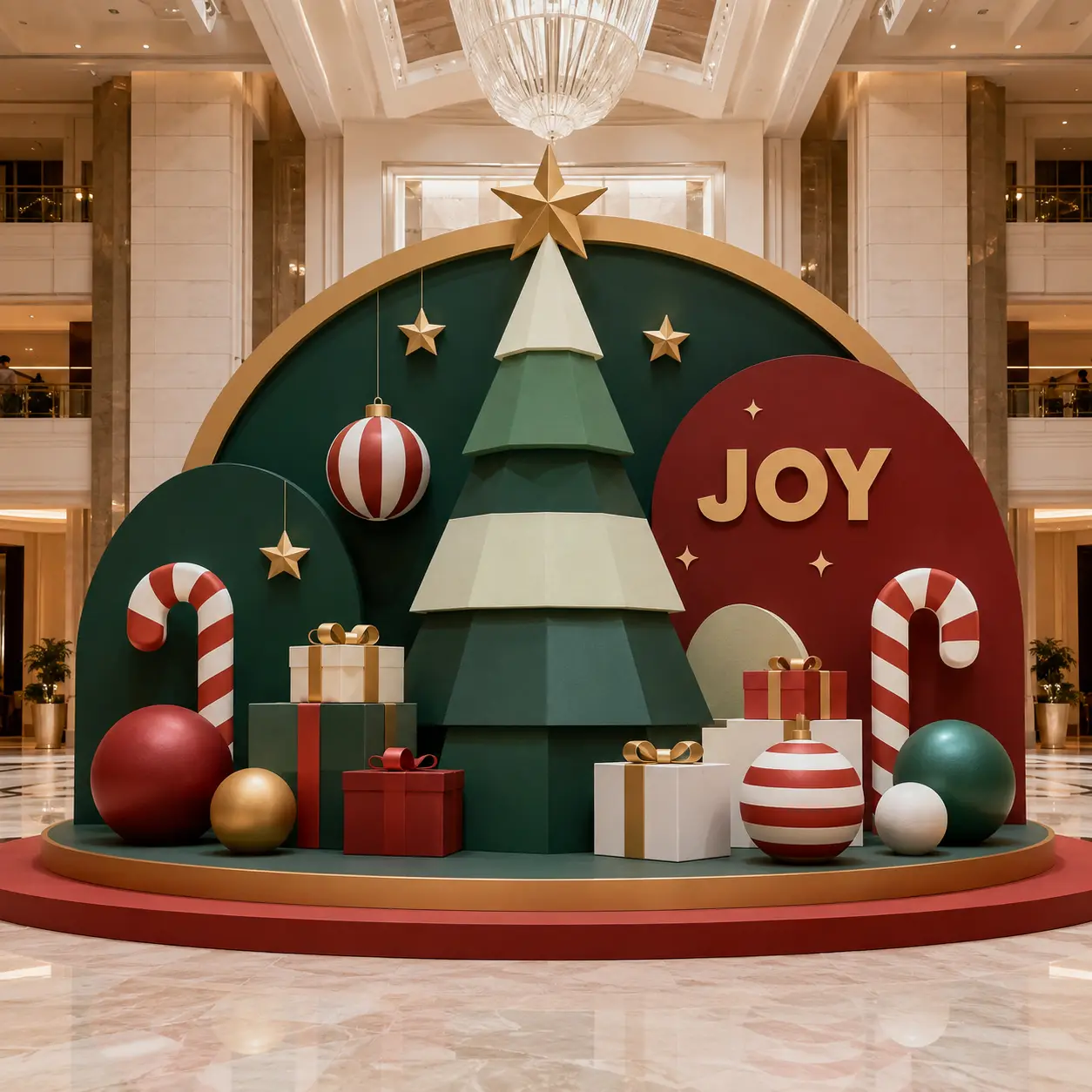
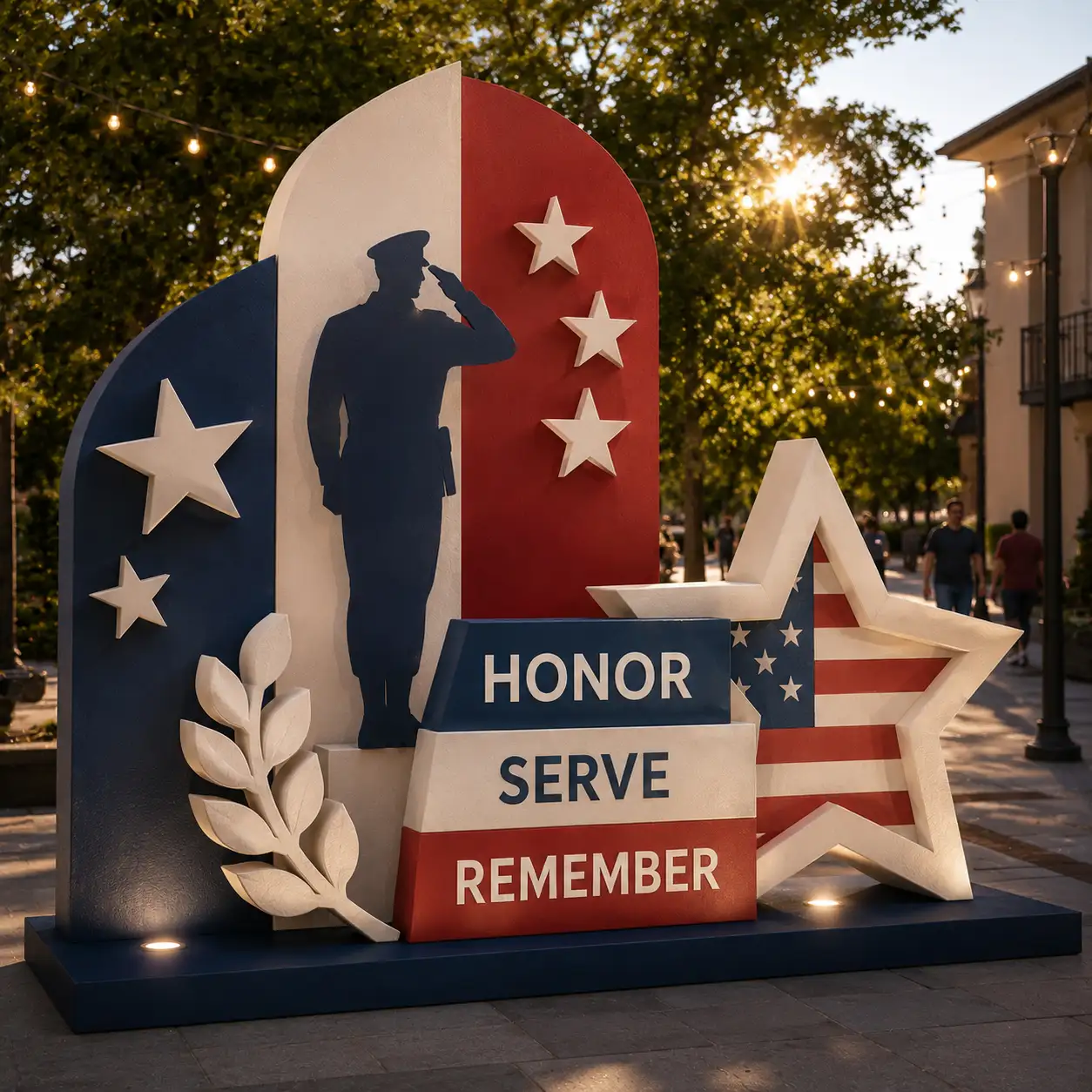
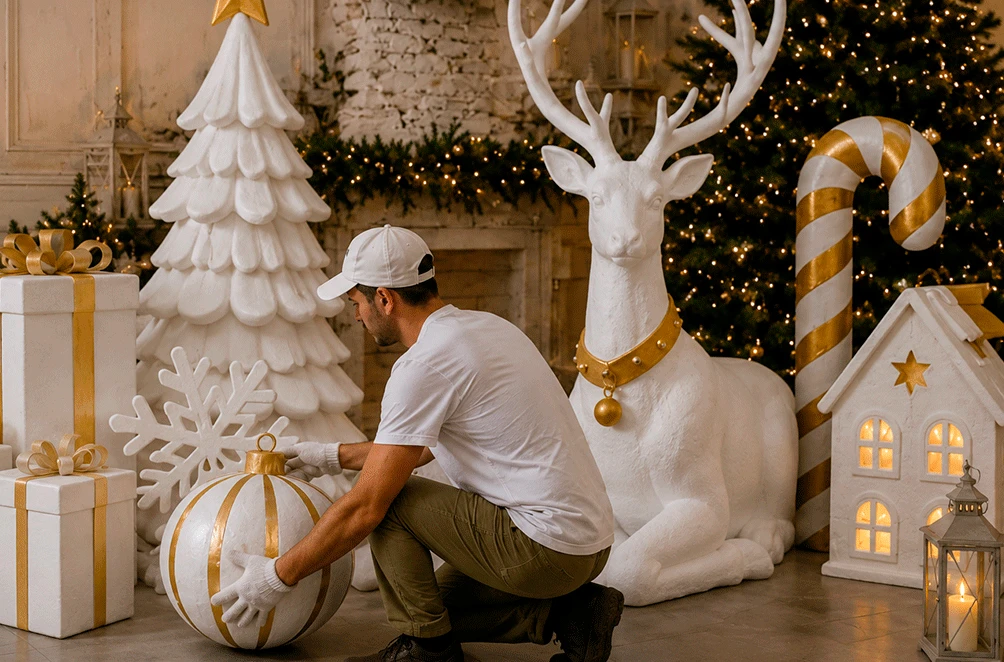
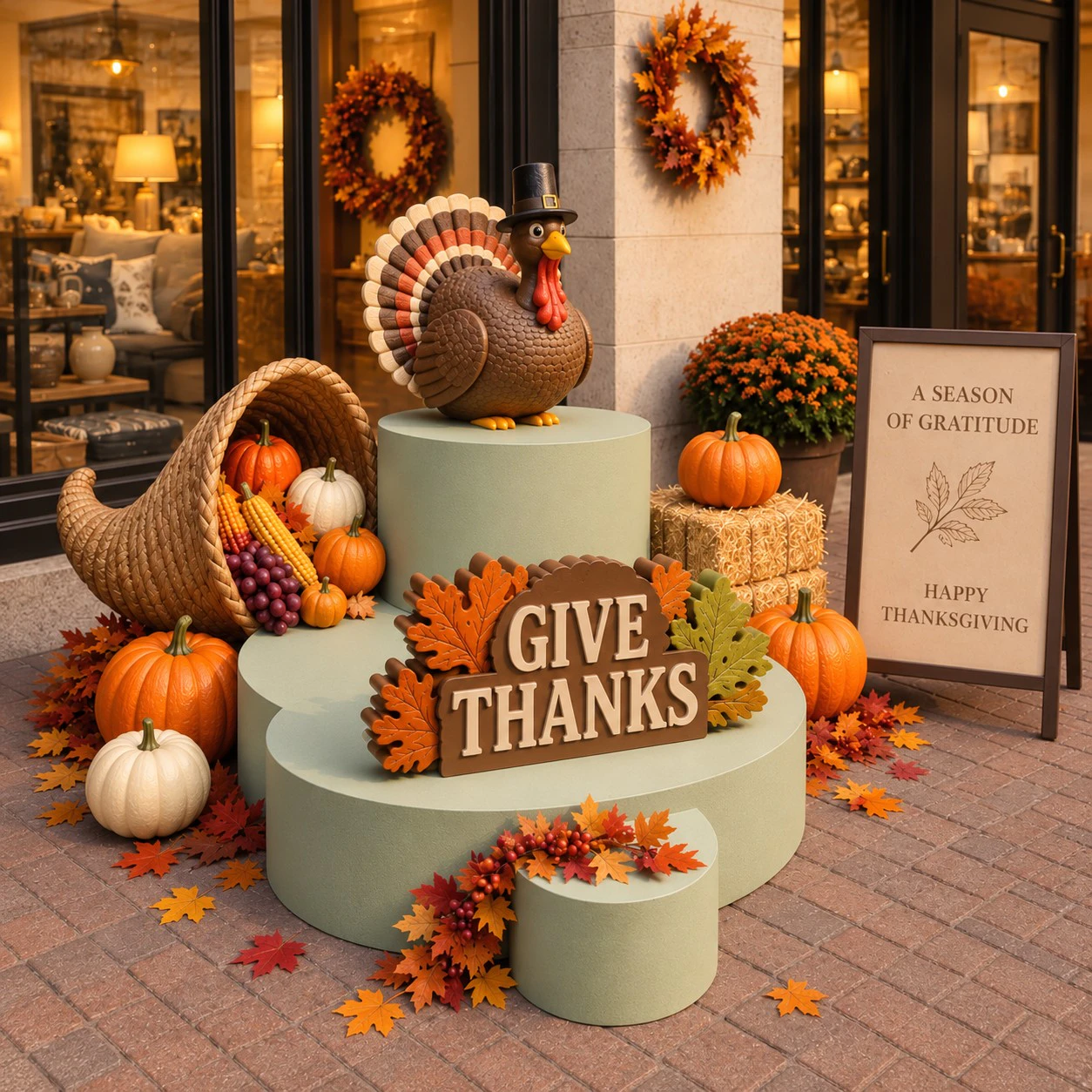
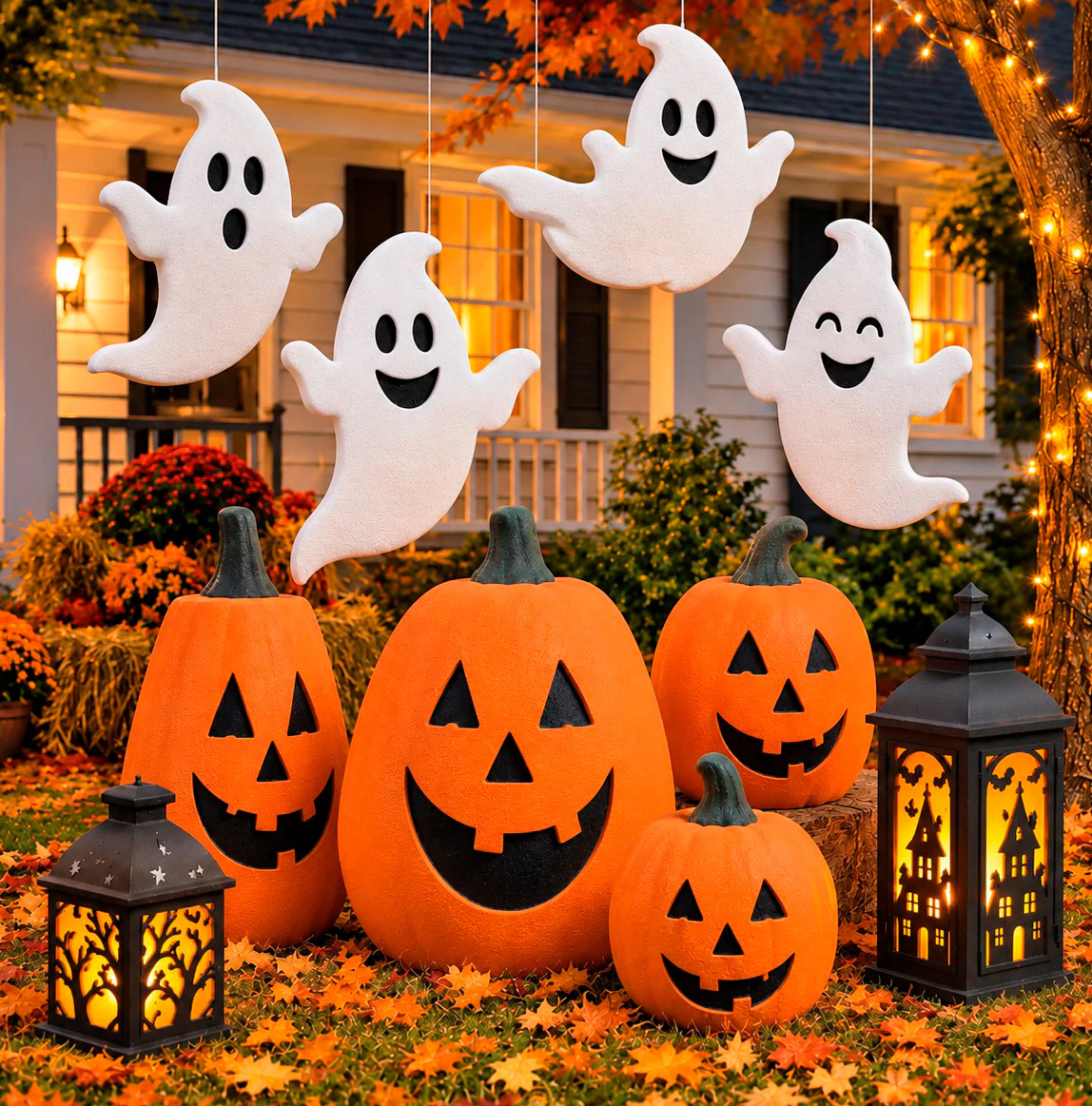
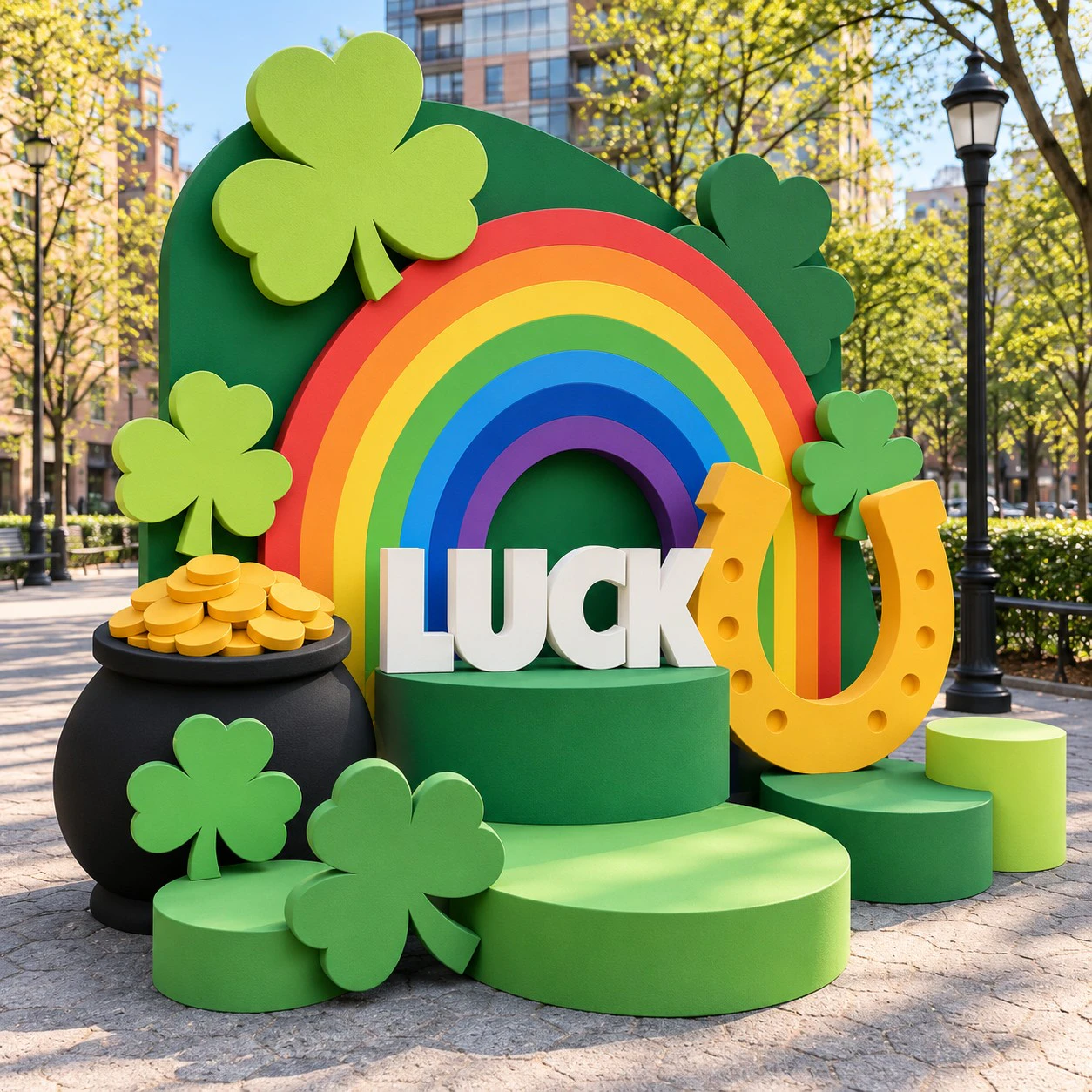
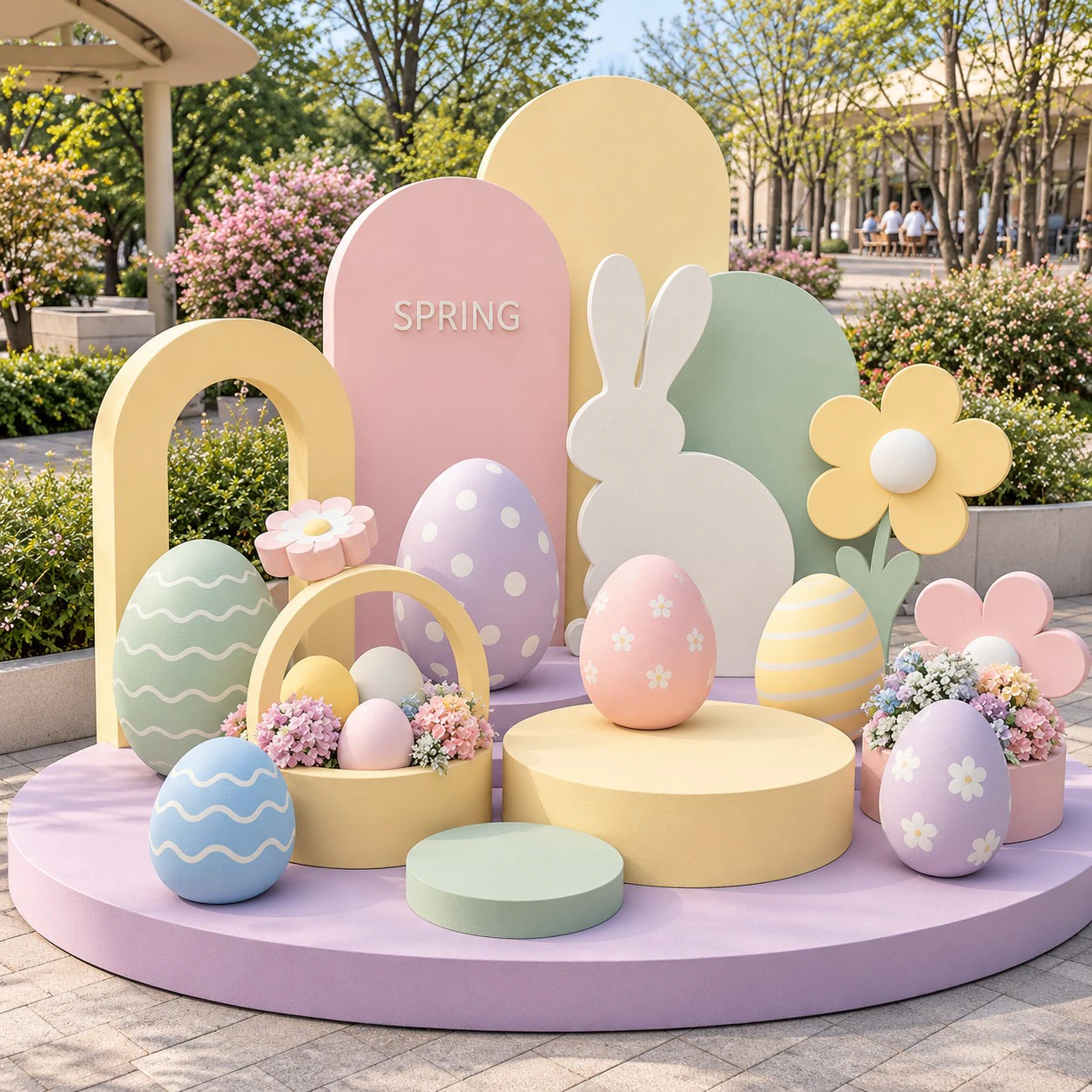
Custom holiday decor can include oversized ornaments, giant gift boxes, candy canes, gingerbread houses, snowflakes, pumpkins, branded sleighs, Santa chairs, walk-through arches, themed columns, faux ice walls, illuminated seasonal signage, retail photo zones, mall centerpieces, hotel lobby displays, outdoor winter villages, and modular scenic environments. The best pieces are not random props. They are seasonal assets: designed, engineered, finished, packed, labeled, installed, removed, stored, refreshed, and used again.
| Seasonal Decor Element | Typical Use | Technical Priority |
|---|---|---|
| Oversized ornaments / gift boxes | malls, hotels, brand activations | lightweight volume, clean finish, dent resistance |
| Holiday arches / entrances | retail corridors, event entries, public plazas | modular sections, secure bases, fast install |
| Winter villages / scenic sets | malls, resorts, municipalities | weather resistance, storage strategy, repairability |
| Halloween / fall props | attractions, photo ops, seasonal retail | impact-resistant coating, bold texture, safe edges |
| Branded seasonal signage | retail, corporate, sponsorship displays | color matching, dimensional readability, LED options |
| Reusable photo-op builds | any seasonal campaign | transport protection, touch-up plan, repeat setup |
Material Logic and Engineering Advantages
The material logic is straightforward. EPS foam has a very low density compared with conventional scenic and construction materials. Fabrication-grade EPS often ranges from about 1.0 to 3.0 lb/ft³. MDF can be around 40–50 lb/ft³, plywood around 30–45 lb/ft³, fiberglass shells vary widely but usually require molds and reinforcement, and steel-heavy structures can reach roughly 490 lb/ft³ before finishing. This is why a 7-foot foam ornament, 10-foot candy cane, or 12-foot winter arch can be moved, staged, and installed with a smaller crew than a visually similar wood, metal, or plaster assembly.
| Material / Build Type | Weight Profile | Seasonal Decor Impact |
|---|---|---|
| EPS foam + hard coating | very low core weight | easiest to scale, ship, lift, and store |
| MDF / plywood | medium to heavy | strong but heavier, harder to move repeatedly |
| Fiberglass | medium | durable, but mold cost and repair workflow can be higher |
| Metal frame + panels | heavy | useful structurally, but freight and install burden rise |
| Plaster / gypsum scenic | brittle / heavy | poor choice for repeated seasonal handling |
| Inflatable decor | light | fast setup, but less premium, less sculptural, wind-sensitive |
Polyurea Hard Coating for Durability
With polyurea hard coating, EPS becomes a much more production-ready system. Polyurea creates a tough protective shell that improves impact resistance, moisture resistance, abrasion resistance, and outdoor usability. Depending on the use case, the coating system can be adjusted for thickness, hardness, surface texture, and finish. A decorative indoor ornament may need a lighter coating, while an outdoor public photo-op or walk-through seasonal arch may require stronger reinforcement at edges, bases, corners, and guest-contact zones. A practical planning range for hard-coated foam decor is often about 2–10 mm of coating buildup, depending on size, expected handling, exposure, and finish requirements.
Weather Resistance for Outdoor Installations
For seasonal use, weather resistance matters. Outdoor Christmas displays, winter market features, Halloween entrances, spring festival props, and holiday photo zones may face rain, humidity, sun, temperature swings, and repeated public contact. A properly coated EPS element can be designed to resist moisture penetration, UV exposure, minor impact, and surface wear far better than raw foam or painted scenic cardboard. Polyurea-coated foam can also tolerate heat and cold better than many lightweight decorative alternatives, although every outdoor project still needs appropriate anchoring, drainage awareness, wind planning, and finish selection.
Financial & Operational Value
Lifecycle Cost and ROI of Reusable Decor
The biggest business advantage is not only fabrication cost. It is lifecycle cost. A seasonal installation that can be reused for three to five years has a different financial profile than a one-season build. If a mall spends more upfront on a durable modular winter centerpiece but reuses it over multiple seasons with minor repainting, relabeling, or LED updates, the cost per season can drop significantly. In many cases, a reusable foam-based seasonal asset can reduce annual decor replacement costs by 30–50% compared with rebuilding disposable scenic pieces every year, depending on storage conditions, handling discipline, and refresh scope.
Logistics, Freight, and Rapid Off-Hours Installation
Freight and labor also change the economics. Because EPS-based builds are lightweight, large pieces can often be divided into manageable modules rather than transported as heavy assembled structures. That can reduce truck space, lift equipment, crew size, load-in time, and on-site risk. For public locations with narrow corridors, freight elevators, mall service routes, hotel lobbies, or limited install windows, that matters. A seasonal reset often happens overnight or within a tight off-hours window. Lighter decor helps teams work faster, safer, and with less disruption to normal operations.
| Cost Factor | Traditional Heavy Decor | EPS + Polyurea Seasonal Decor |
|---|---|---|
| Freight | higher weight, larger handling burden | often lower due to lightweight modules |
| Installation labor | more crew, more equipment | often 30–60% less handling labor |
| Storage | bulky, heavy, harder to stack | lighter modules, labeled crates, easier resets |
| Repair | sanding, carpentry, complex refinishing | patch, sand, repaint, recoat selected zones |
Production Workflow and Craftsmanship
From Concept to 3D Fabrication
Production starts with the commercial goal. Is the display meant to increase foot traffic, create a photo moment, support a sponsor, sell a product, decorate a lobby, anchor a holiday event, or refresh an annual tradition? A retail brand may need a Christmas installation built around product storytelling. A hotel may want elegant winter decor that feels upscale, not cartoonish. A mall may need a large Santa-area environment that holds up under thousands of visitors. A municipality may need outdoor seasonal decor that can be installed quickly, stored safely, and repaired before the next year.
After the concept is defined, the workflow moves through 3D modeling, CNC cutting, hot-wire shaping, hand sculpting, reinforcement planning, hard coating, sanding, priming, painting, texture work, clear coating, test fitting, labeling, and packing. CNC routing is excellent for repeated snowflakes, lettering, brand logos, geometric patterns, ornament panels, and layered dimensional details. Hand finishing is valuable when the surface needs charm: carved wood grain, faux gingerbread texture, frosted ice, stone-like edges, brushed metallic effects, or playful candy finishes.
Surface Finishes and Contact-Zone Protection
Finish quality is what separates a premium seasonal installation from ordinary holiday decor. Glossy red ornaments, matte winter whites, metallic gold accents, faux snow texture, candy enamel, rustic wood, aged bronze, glitter-compatible coatings, and brand-matched colors all behave differently under lighting and photography. For outdoor use, coating and topcoat choices should account for UV exposure, moisture, cleaning, scuffing, and temperature changes. For indoor high-traffic use, the key is touch resistance: lower corners, seating edges, photo-op contact points, and kid-level surfaces usually need stronger protection.
Integrated Lighting and Smart LED Planning
LED integration can add another layer of value when used thoughtfully. Foam elements can be designed with LED channels, backlit lettering, glowing snowflake panels, illuminated arch outlines, lighted signage, or hidden wiring paths. This turns seasonal decor into a stronger evening attraction and gives venues more visual return from the same footprint. The important point is that LED integration should be planned during fabrication, not forced in at the end. Wire routing, service access, heat management, panel thickness, and maintenance access all affect the final system.
| Cost Factor | Traditional Heavy Decor | EPS + Polyurea Seasonal Decor |
|---|---|---|
| Reuse | possible but often harder | strong lifecycle value when packed correctly |
| Seasonal refresh | repainting can be slower | repaint, rebrand, add LED accents, update details |
Long-Term Storage and Modular Maintenance
Storage is often overlooked, but it is one of the main reasons seasonal decor fails financially. A beautiful display that cannot be packed, moved, and reinstalled cleanly becomes expensive over time. Good seasonal fabrication includes modular breakdown, crate planning, labeled sections, alignment marks, touch-up kits, removable bases, replaceable graphic panels, and repair notes. The display should be designed for the second and third installation, not just the first unveiling.
Conclusion: Bridging Creativity and Engineering
For businesses, the value is clear: custom seasonal decor creates stronger photo moments, keeps the environment fresh, supports promotional calendars, extends dwell time, and gives marketing teams reusable visual assets instead of one-off expenses. For operators, it reduces setup stress, storage weight, freight burden, and annual rebuild pressure. For designers, it opens up large-scale shapes that would be too heavy or too costly in traditional materials. And for guests, it creates the kind of memorable seasonal scene people actually stop to photograph.
Custom Holiday & Seasonal Decor works best when creativity and engineering are treated as one process. EPS foam provides scale, polyurea hard coating provides durability, and smart modular planning provides the operational value. The result is decor that feels festive, polished, and memorable while staying light enough to transport, strong enough to reuse, and practical enough for real commercial schedules.
Recommended Articles
Outdoor LED Signs: Custom Illuminated Foam and HDU Signage for Storefronts, Hotels, Restaurants, and Monument Entrances
See the results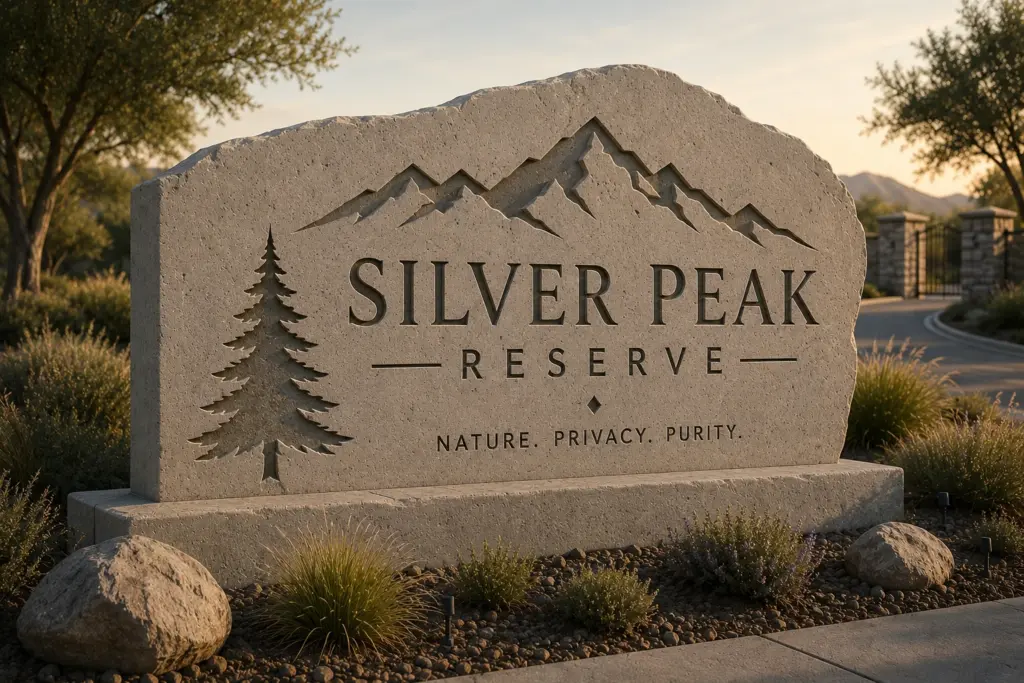
Molds for Cast Stone Signs: Master Patterns, Mold Fabrication, and Lightweight Stone-Look Monument Signage for Communities, Resorts, and Estates
See the results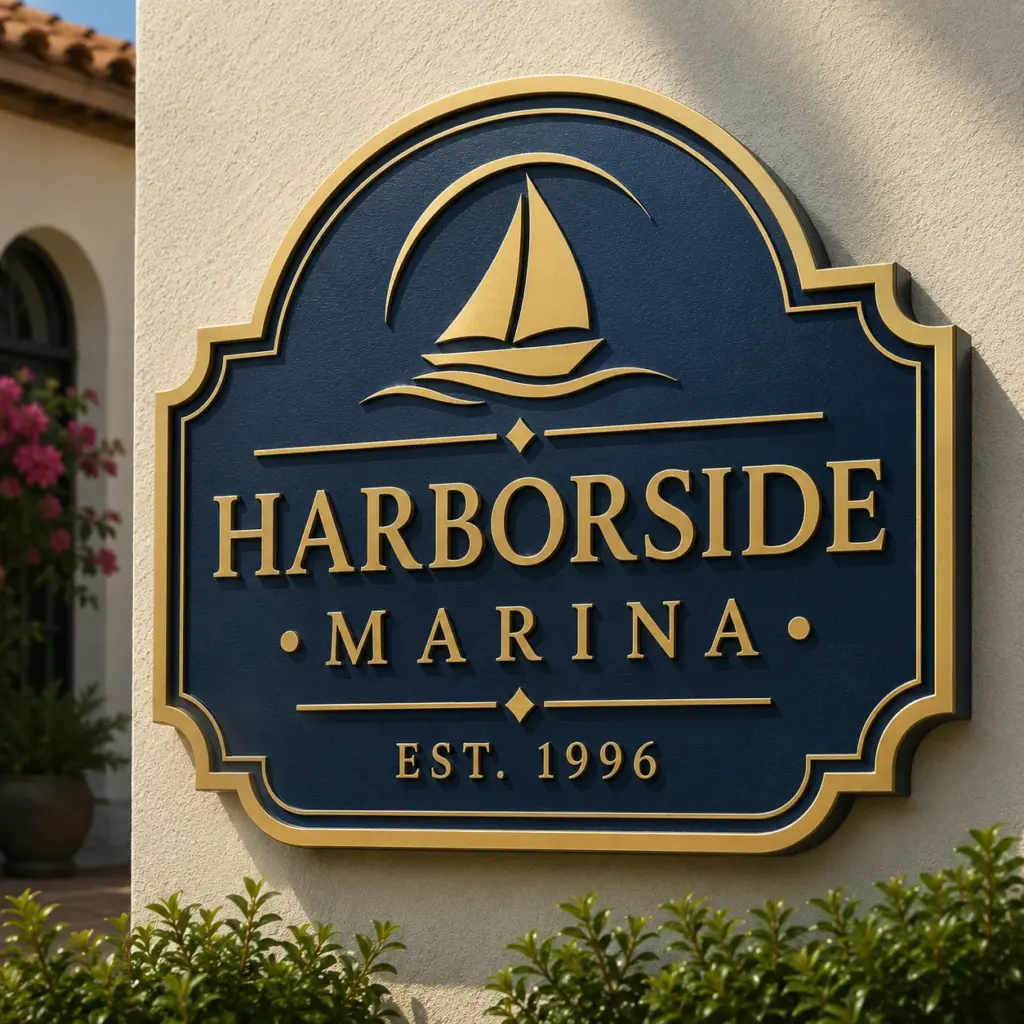
Sandblasted & V-Carved Signs: Lightweight HDU and Foam Dimensional Signage for Resorts, Clubs, Restaurants, and Private Estates
See the results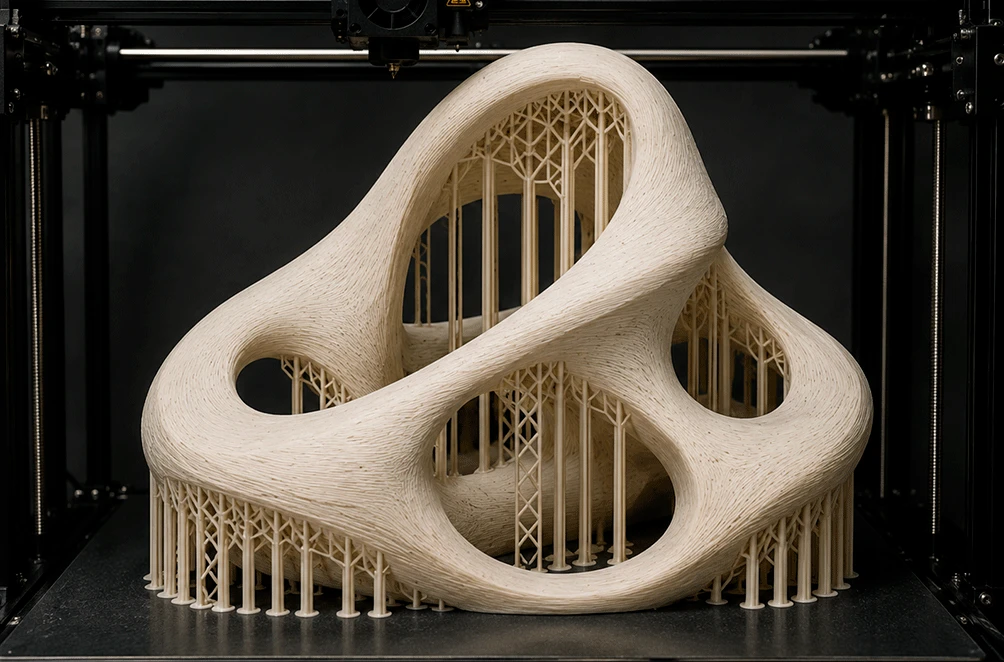
Industrial 3D Printing for Large-Scale Custom Fabrication: From Digital Model to Production-Ready Parts
See the results
Designs for Places of Worship: Lightweight Architectural Elements for Sacred, Community, and Prayer Spaces
See the results
Wedding Arch Colonnades: Technical Fabrication for Luxury Ceremony Entrances, Aisle Architecture, and Event Spatial Design
See the results
Architectural Shapes: Lightweight Custom Forms for Interiors, Exteriors, Homes, Buildings, and Branded Spaces
See the results
Foam Routed Signs: Precision-Cut Dimensional Signage for Lightweight, Custom, and Architectural Brand Environments
See the results
Foam Monument Signs: Lightweight Architectural Signage for Entrances, Campuses, Retail Plazas, and Brand Landmarks
See the results