




Foam Stage & Movie Props: Engineering Lightweight Scenic Objects for Film, Television, and Live Entertainment
In film, television, theater, and live entertainment production, props are not just visual objects placed in front of an audience or camera. They are production tools. A scenic wall, creature body, oversized product replica, fantasy doorway, or sci-fi control surface has to support storytelling while also meeting physical requirements: weight, access, safety, installation time, transportation, durability, repeatability, and repairability. A prop that looks impressive in a rendering but cannot be loaded through a stage door, rigged safely, reset quickly, or duplicated for continuity becomes a production risk rather than a production asset.
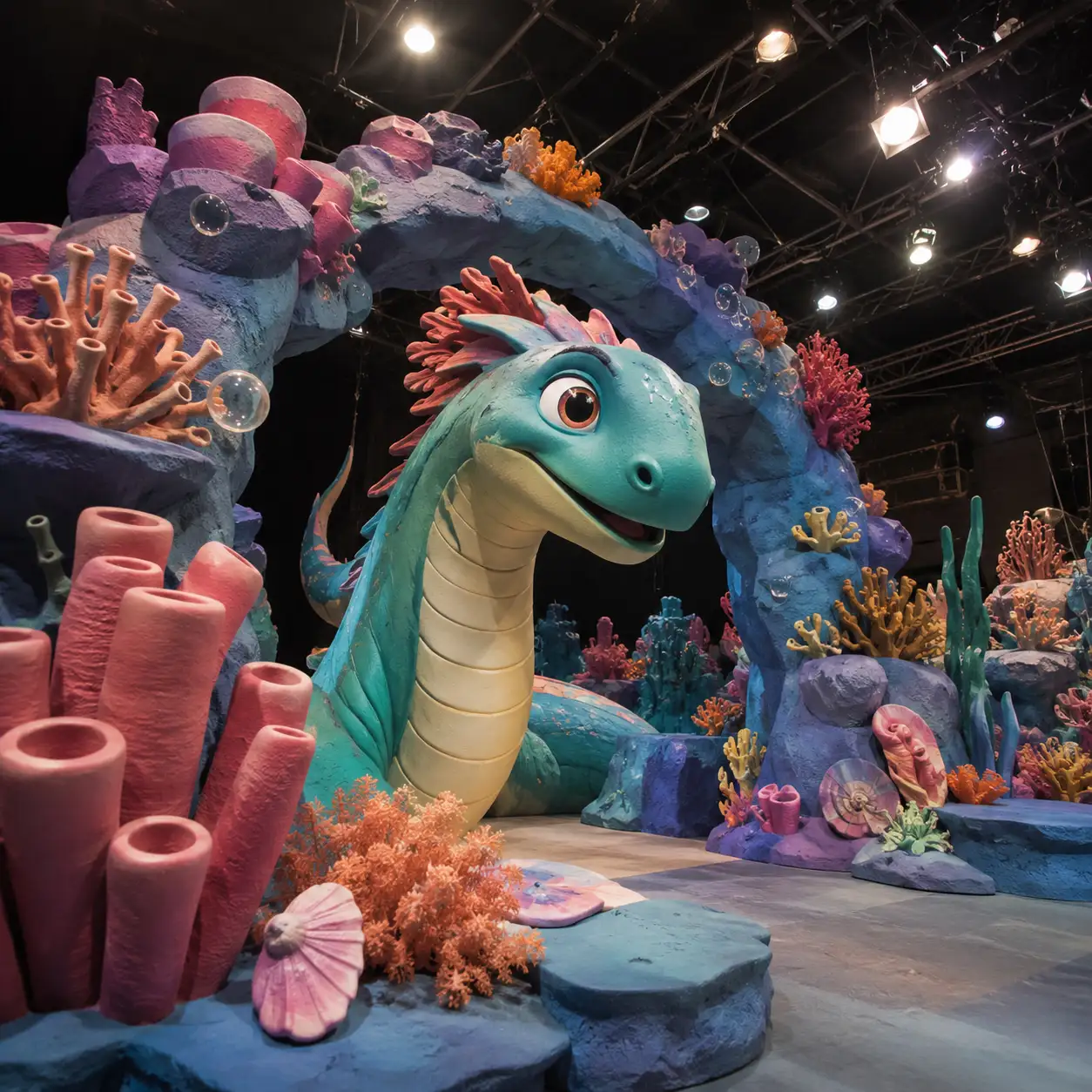
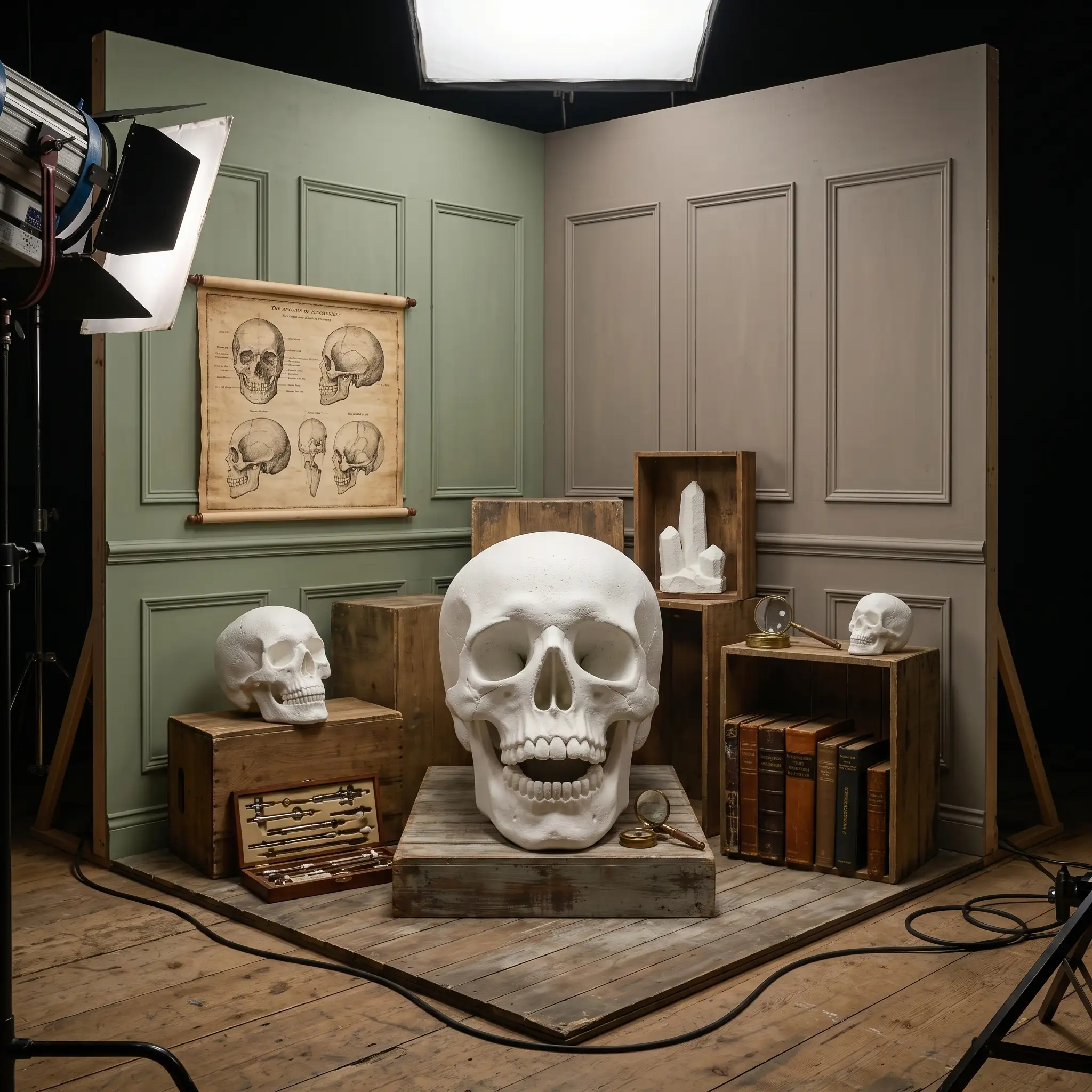
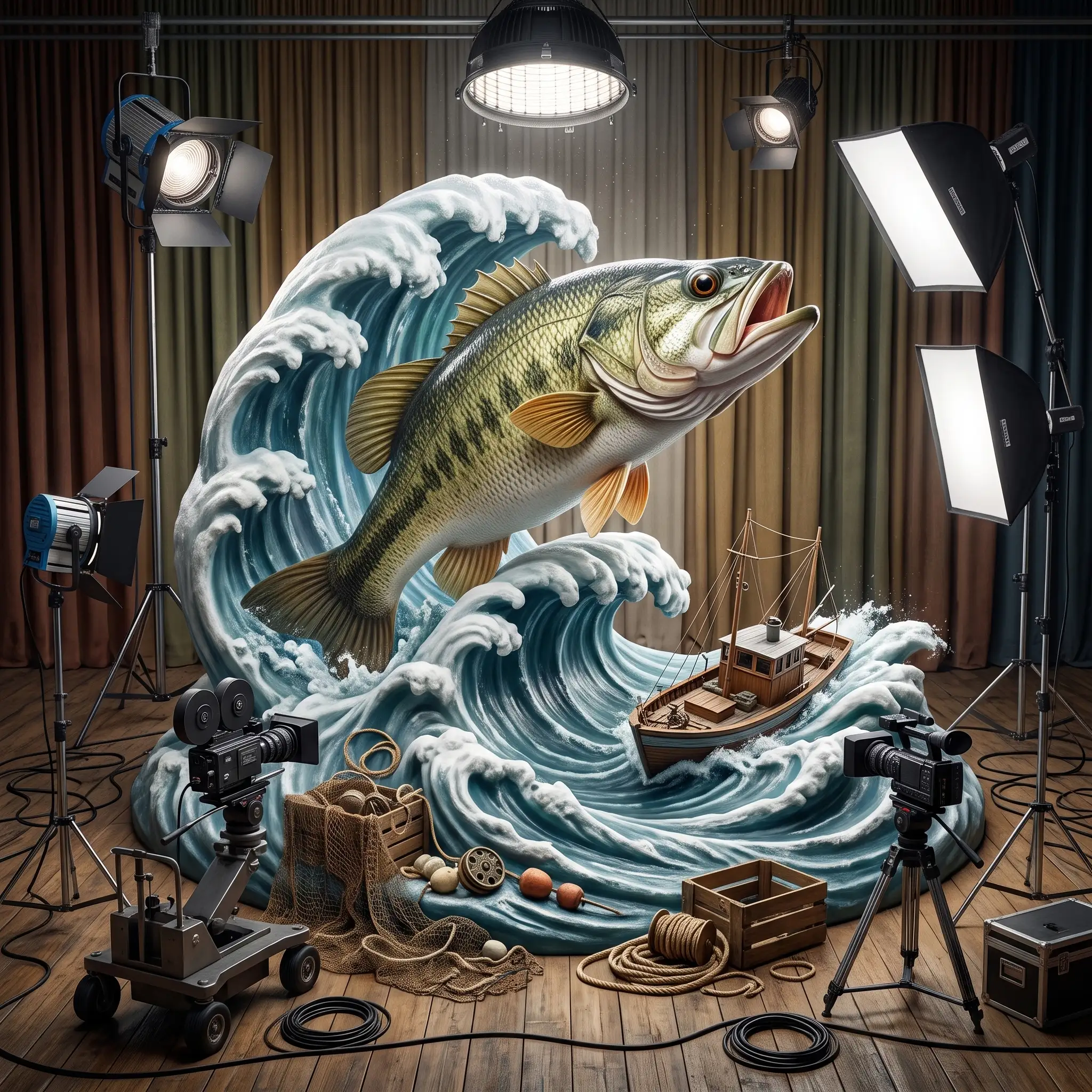
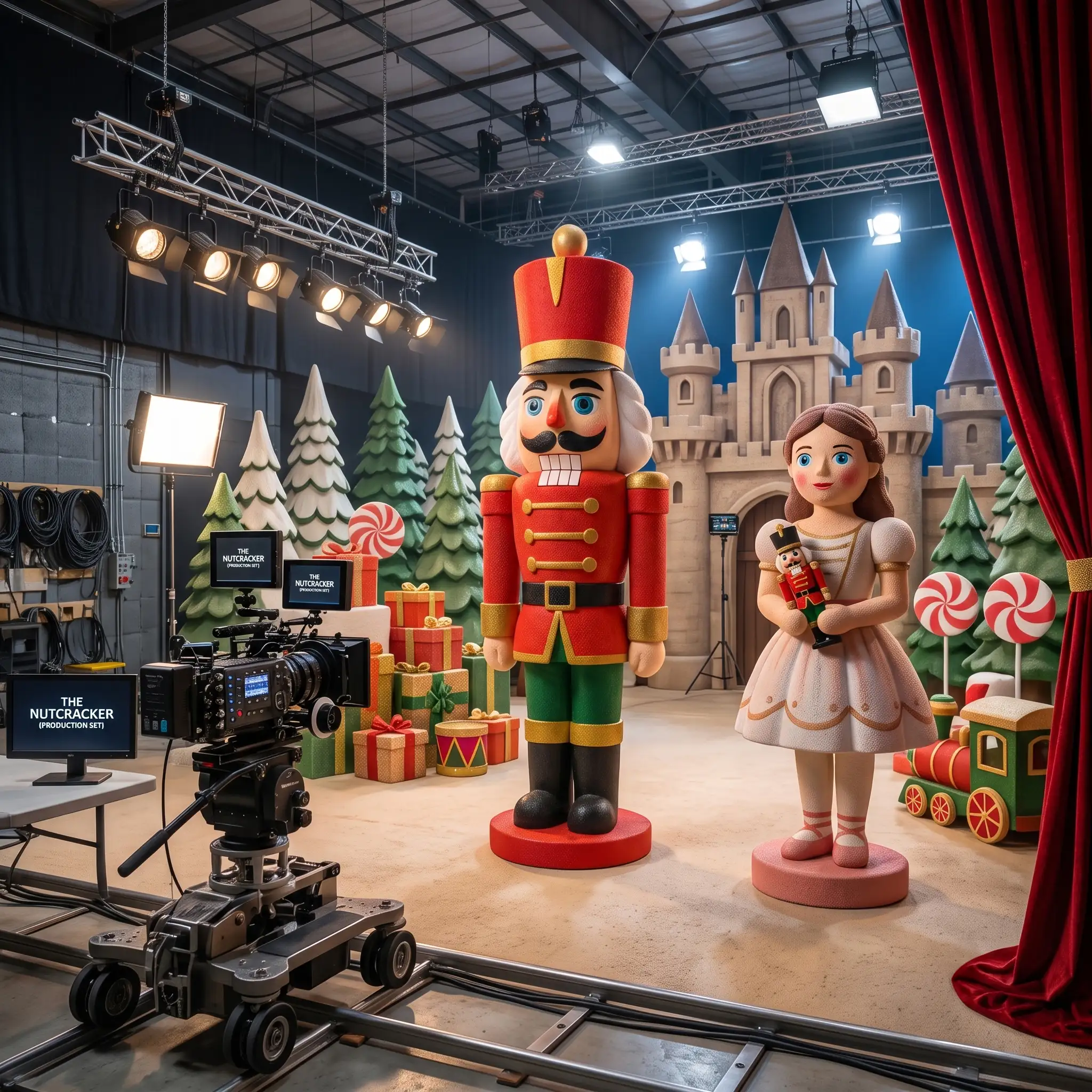
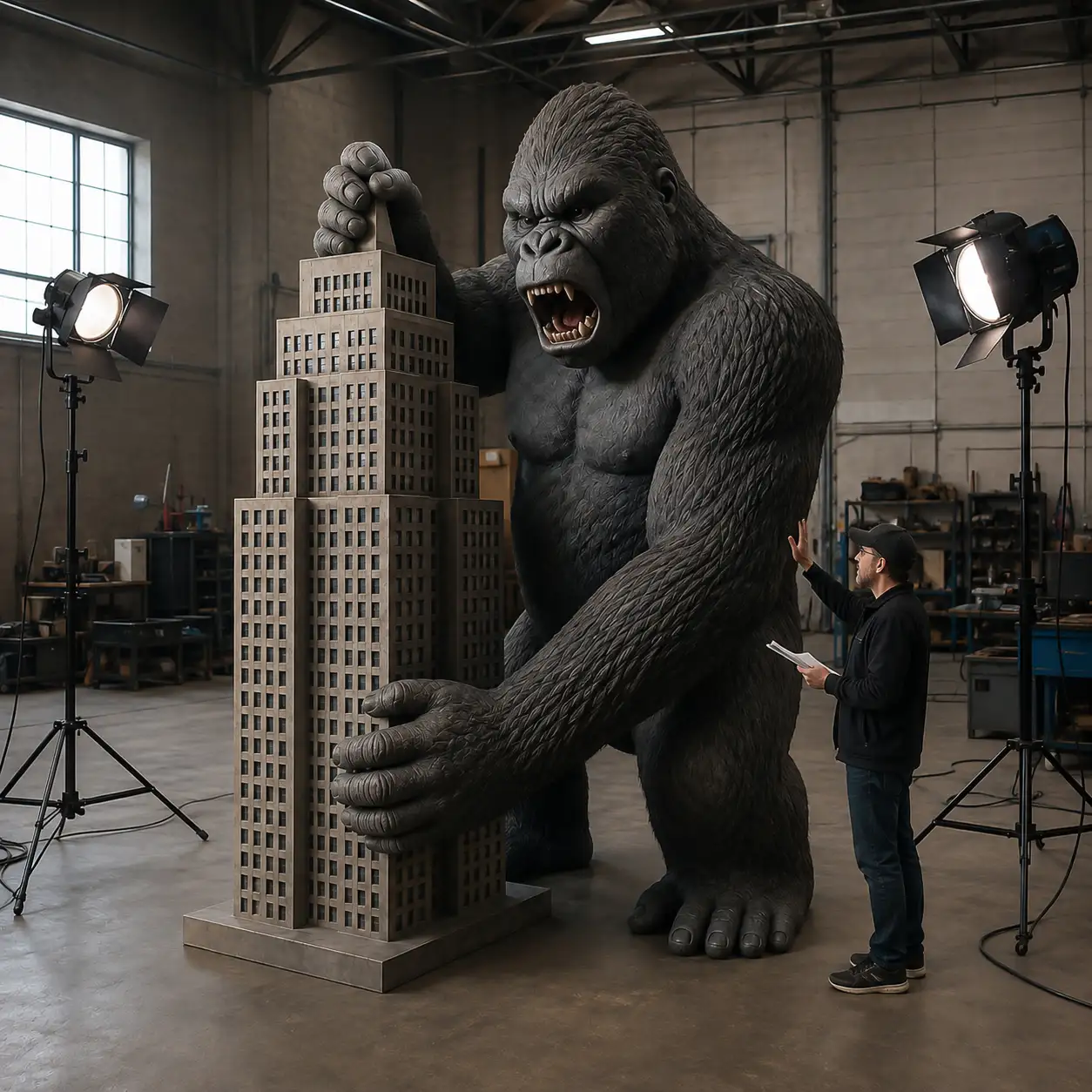
Foam Stage & Movie Props solve this problem by combining large visual scale with lightweight construction. The category includes hero props for close-up shots, background scenic pieces, stunt-safe replicas, oversized objects, themed architectural forms, fantasy and science-fiction elements, creature and character components, promotional entertainment builds, and immersive scenic installations. Depending on the project, the same fabrication logic can apply to a small handheld object, a 6-foot branded piece, a 12-foot creature element, or a scenic structure over 20 feet tall.
The technical value of foam fabrication is not that foam is used alone. In professional work, foam is usually the volumetric core inside a broader build system. EPS foam provides shape and scale; CNC machining, hot-wire cutting, and hand sculpting create geometry; coatings such as polyurea add surface protection; scenic finishing creates the camera-ready illusion; and hybrid reinforcement or modular construction is added where the object must mount, travel, support lighting, or survive repeated handling.
Material Weight and Production Practicality
Weight is one of the first engineering questions because it affects nearly every downstream decision. Load-in, crew size, lifting equipment, transportation cost, stage load, storage, and strike time all depend on mass. High-density EPS commonly used for fabrication is often in the 1-3 lb/ft³ range, while standard plywood is commonly around 34-36 lb/ft³ depending on species and construction. Even before coatings or reinforcement are added, this difference changes the practical feasibility of large scenic objects.
Material Weight Comparison for Scenic Fabrication
| Material / Build Core | Typical Density or Weight Indicator | Production Meaning | Best Use in Stage & Movie Props |
|---|---|---|---|
| EPS foam core | Approx. 1-3 lb/ft³, depending on density/specification | Very high volume-to-weight ratio; large objects remain manageable. | Large prop bodies, scenic volume, rockwork, oversized shapes, fantasy structures. |
| Plywood | Approx. 34-36 lb/ft³ for many common plywood products | Strong and useful, but much heavier as the main volume material. | Subframes, mounting zones, backing plates, localized reinforcement. |
| Solid wood / timber | Usually much heavier than foam; varies widely by species | Adds weight quickly; excellent for structure but inefficient for large fake volume. | Internal support, bases, crates, connection points, limited structural inserts. |
| Fiberglass composite | Variable; lighter than many metals but labor-intensive | Durable shell option, but molds and layup can increase time and cost. | Repeatable shells, long-term outdoor pieces, selected hard-surface applications. |
| Metal reinforcement | High strength but high weight | Useful only where the load path requires it; inefficient as decorative mass. | Rigging points, bases, threaded inserts, armatures, high-stress connections. |
For example, a simple 4 ft × 8 ft × 1 ft solid volume equals 32 cubic feet. In EPS foam, that core may weigh roughly 32-96 lb before coatings and reinforcements. In plywood-density material, an equivalent solid volume would be roughly 1,088-1,152 lb. Real builds are more complex than a solid block, but the comparison shows why foam is so valuable for large entertainment objects: it allows a massive visual presence without creating a massive handling problem.
This weight difference also affects risk. A lighter prop can often be moved by a smaller crew, reset faster between takes, lifted into position without heavy equipment, and transported in smaller sections. For film and television work, where schedules change quickly and scenes may be revisited for pickups or reshoots, lower weight creates operational flexibility.
Fabrication Methods: Choosing the Right Process
A strong Foam Stage & Movie Prop is not defined by one production method. The method is chosen according to the shape, detail level, quantity, surface expectation, and installation environment. Clean mechanical forms need different tools than rockwork. A one-off monster head needs a different approach than 40 repeated sci-fi wall panels. A suspended portal has different engineering concerns than a freestanding photo-op piece.
Fabrication Method Decision Matrix
| Method | Best For | Technical Advantage | Limit / Watch Point |
|---|---|---|---|
| CNC routing / carving | Logos, relief panels, clean geometry, mechanical forms, repeated profiles | High accuracy, repeatability, direct use of digital files, faster scaling. | Tool reach, bit size, and material setup affect fine detail. |
| Hot-wire cutting | Large curves, columns, arches, terrain profiles, broad foam shapes | Fast, efficient for large foam sections; minimal material waste. | Not ideal for sharp internal detail or complex undercuts. |
| Hand sculpting | Rockwork, creature texture, aged masonry, organic surfaces, fantasy terrain | Adds realism, irregularity, and artistic control beyond machine geometry. | Depends heavily on sculptor skill and production time. |
| Polyurethane casting | Repeated trims, emblems, control buttons, character parts, sci-fi details | Consistent copies; useful for 5, 10, 20, or more matching parts. | Requires mold preparation; best when repetition justifies setup. |
| Hybrid build | Large objects with mounting, rigging, LED, or transport requirements | Combines foam volume with inserts, plates, brackets, acrylic, or reinforcement. | Needs planning early; late reinforcement can disturb finish and schedule. |
CNC machining is usually the right choice when the prop requires dimensional control. Sci-fi panels, branded dimensional signage, architectural relief, mechanical shapes, and repeated decorative profiles benefit from a digital workflow because the same geometry can be reproduced later. Hot-wire cutting is efficient for large profiles and broad forms. Hand sculpting is essential when the final look depends on organic variation rather than perfect symmetry.
Casting becomes important when continuity and quantity matter. Film and television productions may need a hero version, a stunt-safe version, a damaged version, and backups. Scenes are rarely filmed in story order, so matching versions may need to appear across different shooting days, locations, camera angles, and reshoots. A mold-based process helps maintain consistency when multiple identical or near-identical pieces are required.
Surface Systems, Engineering, and Finishing
Surface Systems and Durability
Raw foam is rarely the finished product. After shaping, the surface system must be selected according to use. A background scenic wall, a handheld hero prop, a floor-level edge, and a stunt-contact element should not receive the same coating plan. Polyurea hard coat is frequently used because it adds impact resistance, flexibility, and surface protection while keeping the lightweight core underneath. Coating thickness is measured in mils; 20 mil equals 0.020 in, and many protective polyurea applications use thicknesses in this general range or higher depending on the specification.
Use Case vs. Surface & Engineering Requirement
| Prop Type | Typical Risk | Recommended Technical Response | Why It Matters |
|---|---|---|---|
| Background scenic wall | Low direct contact but visible texture under light | Moderate coating, strong scenic paint, clean seams. | Camera read and installation speed matter more than heavy impact protection. |
| Hero prop | Close-up visibility, handling, continuity | Higher-detail shaping, controlled finish, documented paint recipe. | Surface flaws become visible on camera; repeatability matters. |
| Stunt-safe replica | Actor contact, controlled breakage or soft handling | Lower weight, rounded edges, specific reinforcement or breakaway planning. | Safety and predictable behavior matter more than maximum hardness. |
| Floor-level scenic element | Kicks, rolling cases, foot traffic | Stronger lower-edge coating, replaceable base protection. | Damage usually occurs first at corners and low edges. |
| Outdoor or touring piece | Weather, UV, transport, repeated setup | More robust coating, modular build, repair plan, labeled sections. | Longer lifecycle requires durability and serviceability. |
Surface finishing is the visual layer that sells the illusion. Foam can be finished to read as carved limestone, concrete, weathered steel, oxidized metal, brick, marble, wood, industrial plastic, alien material, or a fictional fantasy surface. The goal is not to reproduce the real material structurally. The goal is to reproduce how that material behaves visually under production lighting, camera distance, lens choice, shadow, and movement.
Installation, Modularity, and Logistics
The best fabrication plan fails if the object cannot move through the real production environment. Stage doors, loading docks, truck dimensions, freight elevators, corridors, ceiling height, rigging restrictions, floor loading, and setup windows all affect design. Large scenic structures are often divided into 4-8 ft sections so they can be shipped, carried, aligned, assembled, struck, stored, and reused more efficiently.
A modular prop may use hidden seams, indexed joints, bolts, magnets, alignment pins, embedded plates, threaded inserts, or concealed brackets. Freestanding pieces may require bases, ballast, or wider footprints. Wall-mounted pieces need reliable backing or attachment points. Suspended elements require rigging compatibility and clear load paths. LED-integrated pieces need wiring channels, service panels, power access, acrylic diffusers, and removable covers before coating and painting begin.
Installation Strategy for Foam Stage & Movie Props
| Mounting / Use Mode | Common Technical Features | Typical Advantage | Planning Question |
|---|---|---|---|
| Freestanding | Wide base, ballast, internal frame, removable base plates | Easy placement and repositioning. | Can it remain stable around crew, actors, or visitors? |
| Wall-mounted | Embedded plates, brackets, cleats, lightweight backing | Strong visual effect with minimal floor footprint. | What wall substrate and fastening method are available? |
| Suspended / rigged | Rated attachment points, internal armature, weight documentation | Creates floating or overhead scenic effects. | What is the rigging load path and safety factor? |
| Modular / touring | Labeled sections, indexed joints, hidden seams, repeatable assembly | Faster setup, easier transport, reuse potential. | What is the largest section that can move through access points? |
| Handheld / actor-interaction | Lower weight, rounded edges, controlled hardness, repair access | Safer handling and faster resets. | How often will it be touched, carried, dropped, or reset? |
The Business Case: Why This Matters for Productions
For production teams, the value of Foam Stage & Movie Props is both visual and operational. Large custom pieces can be fabricated faster than many traditional heavy-material alternatives, shipped with less burden, installed with fewer complications, and modified when creative direction changes. In practice, this can reduce schedule pressure and help art departments, scenic shops, event producers, and entertainment teams say yes to larger visual ideas without accepting unnecessary logistical risk.
The biggest advantage is not simply weight reduction. It is control. CNC files, molds, templates, labeled modular sections, documented coating systems, and recorded paint recipes help production teams maintain continuity across versions. This is especially important in film and television, where the same object may need to match across shooting days, close-ups, wide shots, stunt sequences, pickup shots, and reshoots.
A technically planned prop also supports lifecycle value. A one-time scenic piece may only need to survive a short production window. A touring entertainment piece may need repeated assembly and strike. A theme environment element may need long-term service access. A studio promotional object may need to travel between locations. The fabrication strategy should match the expected lifecycle rather than applying the same build method to every object.
Practical Production Impact Analysis
| Production Factor | Traditional Heavy Build Risk | Foam-Based Fabrication Advantage | Result for Client / Production Team |
|---|---|---|---|
| Transportation | Large objects may require heavier vehicles or equipment. | Lower weight and modular sections simplify movement. | Easier delivery, storage, and repositioning. |
| Installation | More labor, longer setup, more lifting coordination. | Lighter parts and planned connections speed assembly. | Shorter load-in and reduced on-site complexity. |
| Continuity | Recreating damaged or repeated parts manually can vary. | CNC data and molds support consistent duplication. | Cleaner matching across scenes, tours, or reshoots. |
| Creative changes | Heavy builds are harder to modify late. | Foam can often be patched, reshaped, repainted, or adapted. | More flexibility when direction changes. |
| Visual scale | Large scale increases cost and handling burden. | Foam delivers large forms without equivalent mass. | Stronger visual impact with more practical execution. |
Conclusion
Successful Foam Stage & Movie Props are not defined by one material or one technique. They come from the integration of engineering, fabrication, scenic artistry, logistics planning, and production experience. By combining EPS foam, CNC machining, hot-wire cutting, polyurethane casting, polyurea coating systems, hybrid reinforcement, lighting-ready construction, modular assembly, and advanced scenic finishing, Royal Foam Art Design can create production-ready props and scenic elements designed for real filming, staging, and entertainment conditions.
The final product should not only look convincing on screen or on stage. It should help the production work faster, safer, and with fewer practical obstacles. That is the real purpose of lightweight engineered prop fabrication: visual scale with operational control.
Recommended Articles
Outdoor LED Signs: Custom Illuminated Foam and HDU Signage for Storefronts, Hotels, Restaurants, and Monument Entrances
See the results
Molds for Cast Stone Signs: Master Patterns, Mold Fabrication, and Lightweight Stone-Look Monument Signage for Communities, Resorts, and Estates
See the results
Sandblasted & V-Carved Signs: Lightweight HDU and Foam Dimensional Signage for Resorts, Clubs, Restaurants, and Private Estates
See the results
Industrial 3D Printing for Large-Scale Custom Fabrication: From Digital Model to Production-Ready Parts
See the results
Designs for Places of Worship: Lightweight Architectural Elements for Sacred, Community, and Prayer Spaces
See the results
Wedding Arch Colonnades: Technical Fabrication for Luxury Ceremony Entrances, Aisle Architecture, and Event Spatial Design
See the results
Architectural Shapes: Lightweight Custom Forms for Interiors, Exteriors, Homes, Buildings, and Branded Spaces
See the results
Foam Routed Signs: Precision-Cut Dimensional Signage for Lightweight, Custom, and Architectural Brand Environments
See the results
Foam Monument Signs: Lightweight Architectural Signage for Entrances, Campuses, Retail Plazas, and Brand Landmarks
See the results