




Event Props & Decor: Lightweight Custom Elements for Memorable Event Environments
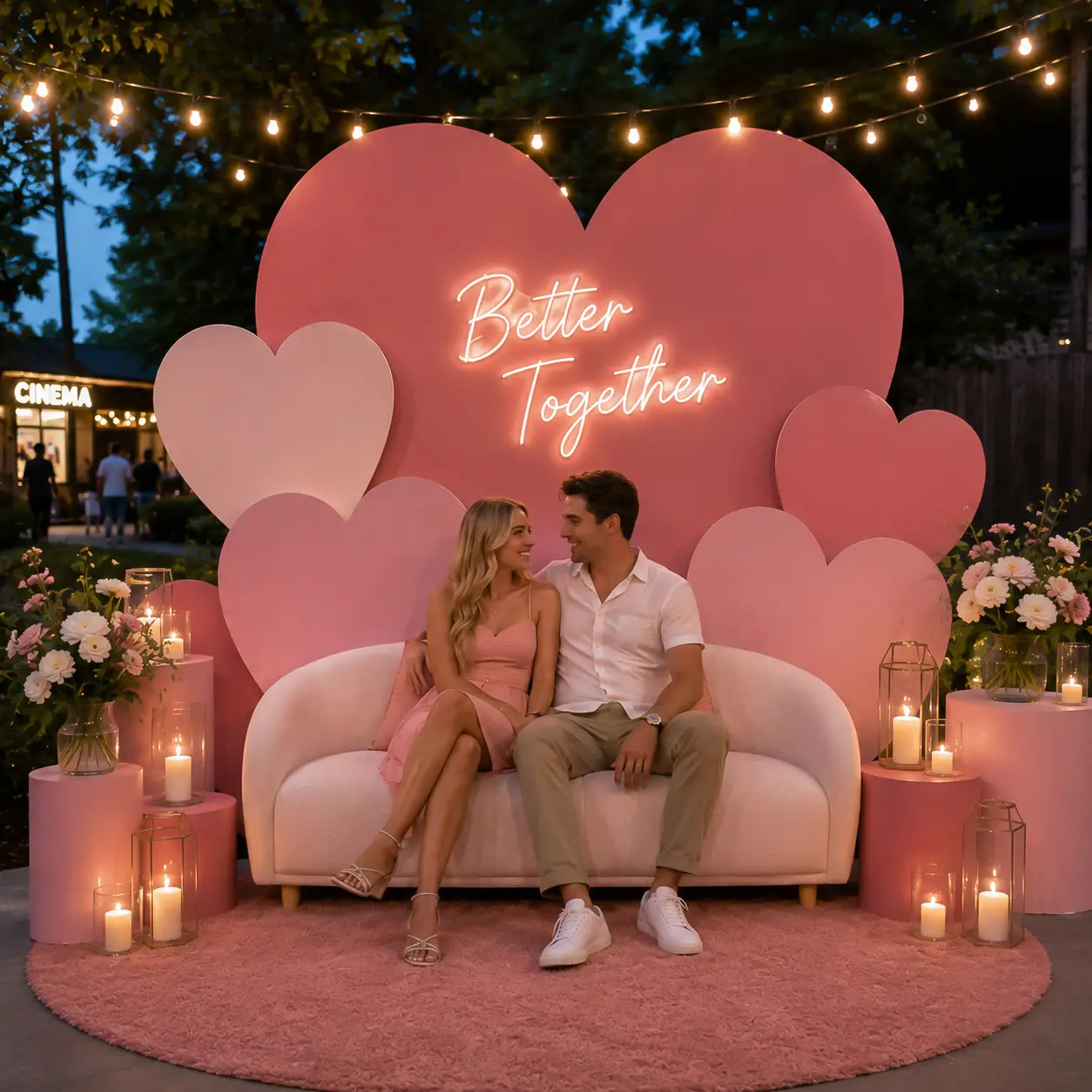
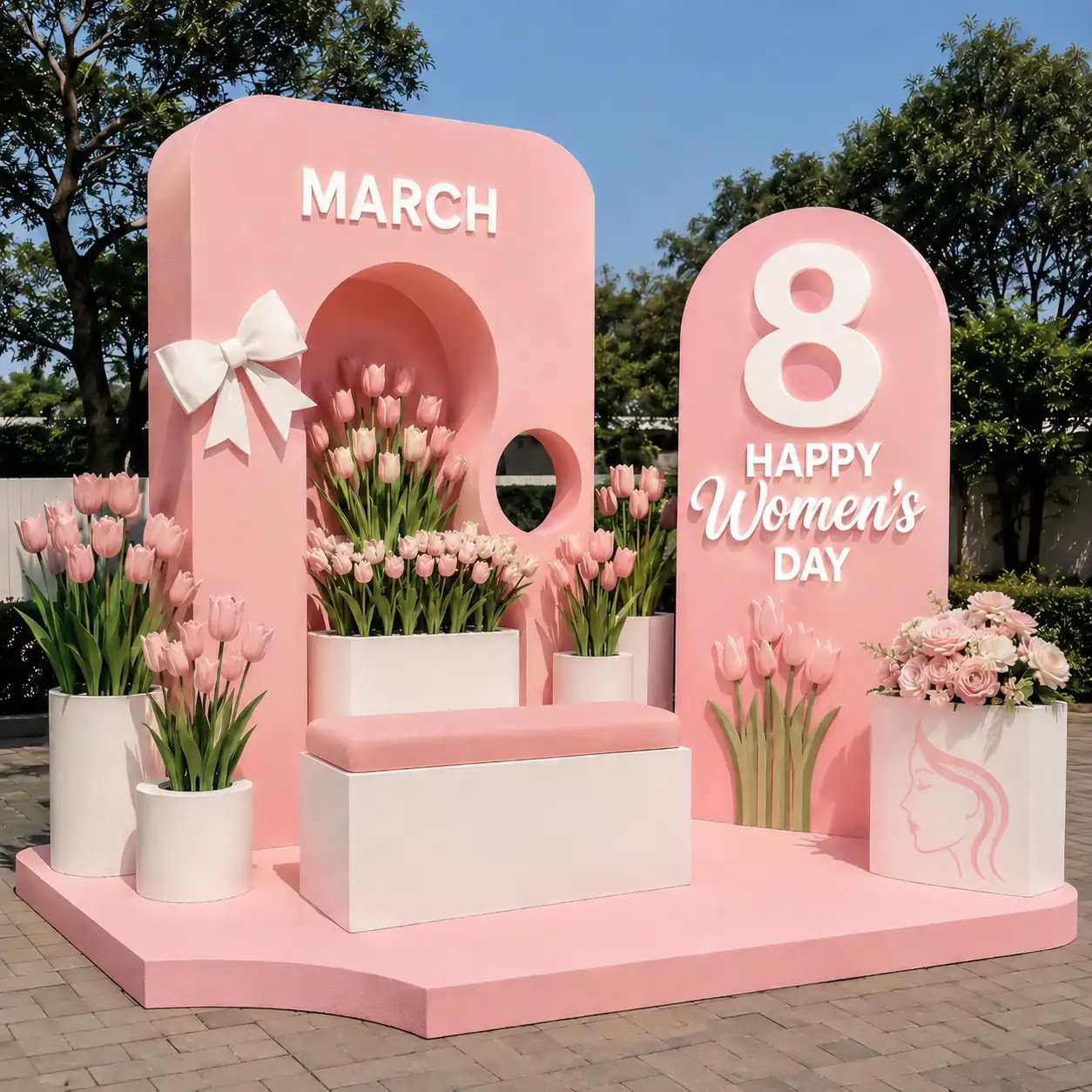
Event props and decor are custom-built physical elements that help transform a temporary venue into a complete visual experience. This category includes decorative focal pieces, photo-zone structures, themed accents, branded installations, oversized decorative objects, ceremony or stage details, entrance features, scenic backdrops, seasonal props, and guest-facing decor for corporate events, weddings, galas, product launches, private celebrations, hospitality programs, and nonprofit events.
This category is different from trade show displays, product replicas, or general sculptures. A trade show display usually works inside a booth and must compete for aisle attention. A product replica is judged by brand accuracy and proportion. A sculpture is primarily about form and artistic presence. Event props and decor are broader: they shape the mood of the space, support the story of the event, create photo moments, guide guest attention, and make the environment feel intentional rather than simply decorated.
For Royal Foam Art Design, Event Props & Decor is a practical fabrication category because event teams usually face the same challenge: they need large, polished, memorable elements, but they also need fast setup, manageable weight, safe handling, flexible design, and clean removal after the event.
Why Event Props & Decor Matter
Events are temporary, but the visual impression can outlast the evening. Guests may not remember every table setting or lighting cue, but they remember the oversized floral letters, the sculptural baby shower blocks, the branded gala entrance, the themed casino props, the giant champagne bottle, the ceremony arch, or the photo wall everyone used during the night.
The business value is not only decoration. Strong props and decor improve the perceived production level of an event. They give photographers better content, help sponsors or brands appear more visible, create shareable moments, and allow planners to turn an ordinary venue into something more specific to the client’s story.
Traditional decor materials can make this difficult. Wood, MDF, plaster, fiberglass, resin, metal, and cast stone can produce attractive pieces, but they often add weight, longer fabrication time, larger crews, higher transport cost, difficult storage, and more risk during load-in. EPS foam with a hard-coated surface offers another route: large visual scale with lower mass and more flexible shaping.
Common Event Prop and Decor Types
| Prop / decor type | Typical event use | Main production priority |
|---|---|---|
| Oversized initials / names | weddings, galas, private events | scale, finish, stable placement |
| Themed scenic props | casino nights, holiday events, parties | visual story, texture, fast setup |
| Photo-zone elements | corporate events, social events, launches | durability, guest interaction, clean surfaces |
| Decorative arches / frames | ceremonies, entrances, stage moments | modularity, balance, safe installation |
| Branded decor pieces | product launches, sponsor events | color match, logo clarity, premium finish |
The key difference is that event decor is often judged by atmosphere. It does not always need to reproduce a product perfectly or function as a booth system. It needs to make the room feel designed, memorable, and camera-ready.
Materials, Weight, and Cost Efficiency
EPS foam is useful because it creates volume without the material burden of traditional substrates. Fabrication-grade EPS is commonly used in density ranges around 1.0–3.0 lb/ft³ depending on size, detail, edge strength, and expected handling. By comparison, many wood-based materials, plaster-like finishes, concrete, or metal-heavy builds can be dozens or even hundreds of times heavier by volume. Public material references place normal-weight concrete around 145–150 lb/ft³ and steel around 490 lb/ft³, which shows why heavy decorative builds can quickly become impractical for temporary events.
A finished Royal Foam Art Design decor piece is not raw foam only. It may include polyurea or polyurethane hard coating, plywood or PVC inserts, acrylic faces, LED accents, internal reinforcement, base plates, hidden ballast, textured finishes, metallic paint, printed graphics, or protective topcoats. Even with those additions, foam-based event decor can often remain 70–95% lighter than visually similar heavy-material pieces.
| Material approach | Strength | Limitation in events | Typical business impact |
|---|---|---|---|
| EPS + hard coat | large scale, low weight, custom shapes | needs correct coating and base planning | lower handling, faster setup, easier storage |
| MDF / plywood | rigid, familiar, good for flat builds | heavy, slower for sculptural forms | higher labor and transport burden |
| Fiberglass / resin | smooth, durable surface | molds and finishing can raise cost/time | useful for repeats, less agile for one-offs |
| Metal-heavy decor | strong and structural | expensive, heavy, overbuilt for visual props | best for load-bearing frames, not decorative volume |
| Plaster / cast stone look | realistic, solid appearance | fragile or heavy for temporary use | attractive but harder to move and reuse |
For many event environments, EPS-based decor can reduce handling and installation labor by roughly 30–60%, depending on scale, venue access, finish sensitivity, base design, and whether the piece is built as one object or modular sections. Cost savings do not always mean the fabrication price is lower in every case. The real savings often appear across freight, drayage, crew size, setup time, repairability, storage, and reuse.
Production Process, Finishing, and Execution
Fabrication and Sculpting Workflow
A custom event prop usually starts with the event concept: mood board, venue plan, color palette, theme, brand guide, stage layout, or inspiration image. The fabrication plan then converts the visual idea into a buildable object.
CNC routing and hot-wire cutting are efficient for letters, blocks, frames, arches, oversized symbols, layered shapes, and repeatable decorative parts. Hand sculpting supports softer forms, themed textures, ornamental details, organic curves, and playful pieces. For repeated trim, small icons, decorative ornaments, or sharper details, polyurethane casting can provide better consistency than carved foam alone.
Surface Coatings and Finish Quality
Hard coating is selected according to use. A backdrop viewed from 15 feet away may not need the same coating as a photo-zone prop that guests touch all night. High-contact edges, corners, lower sections, bases, and handheld or interactive details need stronger surface protection. A practical hard-coat planning range can be approximately 2–10 mm, depending on expected handling, location, and durability requirement.
Finish quality is especially important in events because props are often photographed close-up. Matte, gloss, metallic, faux stone, faux wood, faux brick, velvet-like paint effects, glitter finishes, floral textures, and brand-color coatings all need surface preparation. Weak sanding, visible seams, inaccurate color, or fragile edges can make a large prop feel temporary in the wrong way.
Logistics, Safety, and Operational Planning
Installation, Stability, and Reusability
Event props are usually installed under pressure. Ballrooms, rooftops, beaches, barns, hotels, venues, and private estates all have different access limitations. Large decor may need to pass through service elevators, narrow corridors, temporary flooring, stairs, tents, or outdoor pathways. That means fabrication must consider the route before the object is built.
Large pieces are often divided into modular sections with hidden seams, alignment pins, labeled parts, embedded plates, removable bases, or quick-connect hardware. Tall decorative elements may need wider footprints, hidden ballast, floor plates, or discreet anchoring. Outdoor decor requires more attention to moisture, UV exposure, wind, temperature changes, and ground conditions.
Reusable decor needs a different build strategy from one-night decor. If the piece will travel to multiple events, it should include stronger coatings, replaceable contact zones, labeled components, repairable paint systems, and protective packaging. This can turn one custom build into a repeatable asset for planners, agencies, venues, or brands.
Common Pitfalls in Event Decor Fabrication
The first mistake is treating event decor as “just decoration.” In reality, these objects affect guest movement, photography, setup schedule, safety, brand perception, and the quality of the event environment.
The second mistake is choosing heavy materials for visual volume. If an oversized prop does not need to carry structural load, overbuilding it with wood, plaster, or metal can increase cost without improving the guest experience.
The third mistake is ignoring the venue. A beautiful 10-foot piece is not useful if it cannot fit through the access route, remain stable on site, or be removed quickly after the event.
Commercial Impact and Final Value
Custom foam event props and decor help businesses create a stronger emotional and visual return from temporary environments. For planners, they make concepts more distinctive without adding unnecessary production weight. For brands, they create shareable moments and clearer visual storytelling. For venues and agencies, reusable foam decor can become an inventory asset that supports multiple clients and themes.
The advantage is the combination of creative freedom and operational control: large scale, lower weight, faster production, easier transportation, safer handling, flexible finishes, modular installation, and realistic reuse potential.
Conclusion
Event Props & Decor is not simply a decorative category. It is the fabrication of temporary visual environments where emotion, photography, guest experience, logistics, and safety all meet at the same time.
Royal Foam Art Design approaches this work through EPS foam shaping, CNC cutting, hot-wire processing, hand sculpting, hard coating, polyurethane casting, hybrid reinforcement, texture work, color matching, modular assembly, and delivery-ready preparation. The result is event decor that can feel large, polished, and memorable while remaining practical to transport, install, protect, adapt, and reuse.
Recommended Articles
Outdoor LED Signs: Custom Illuminated Foam and HDU Signage for Storefronts, Hotels, Restaurants, and Monument Entrances
See the results
Molds for Cast Stone Signs: Master Patterns, Mold Fabrication, and Lightweight Stone-Look Monument Signage for Communities, Resorts, and Estates
See the results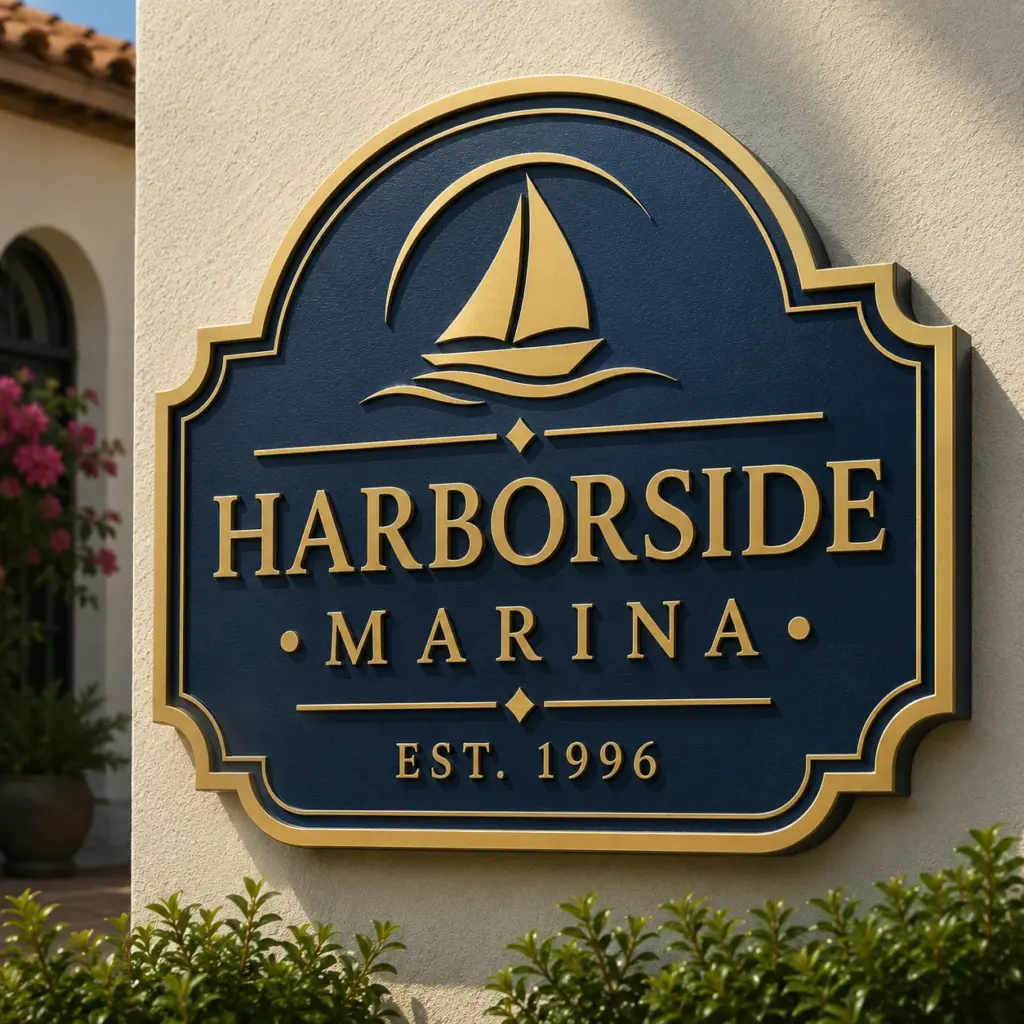
Sandblasted & V-Carved Signs: Lightweight HDU and Foam Dimensional Signage for Resorts, Clubs, Restaurants, and Private Estates
See the results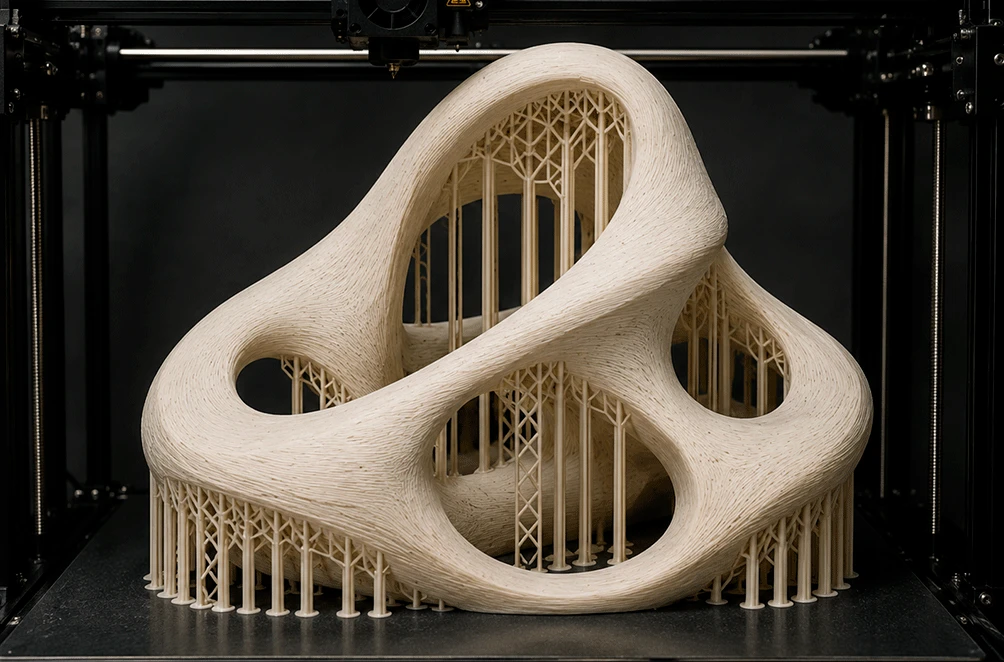
Industrial 3D Printing for Large-Scale Custom Fabrication: From Digital Model to Production-Ready Parts
See the results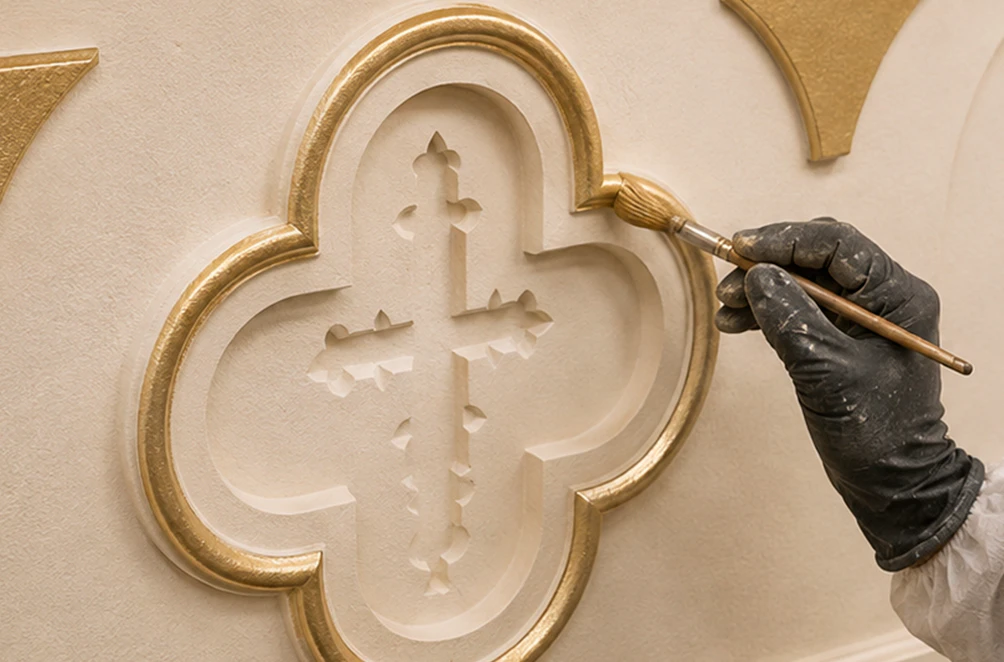
Designs for Places of Worship: Lightweight Architectural Elements for Sacred, Community, and Prayer Spaces
See the results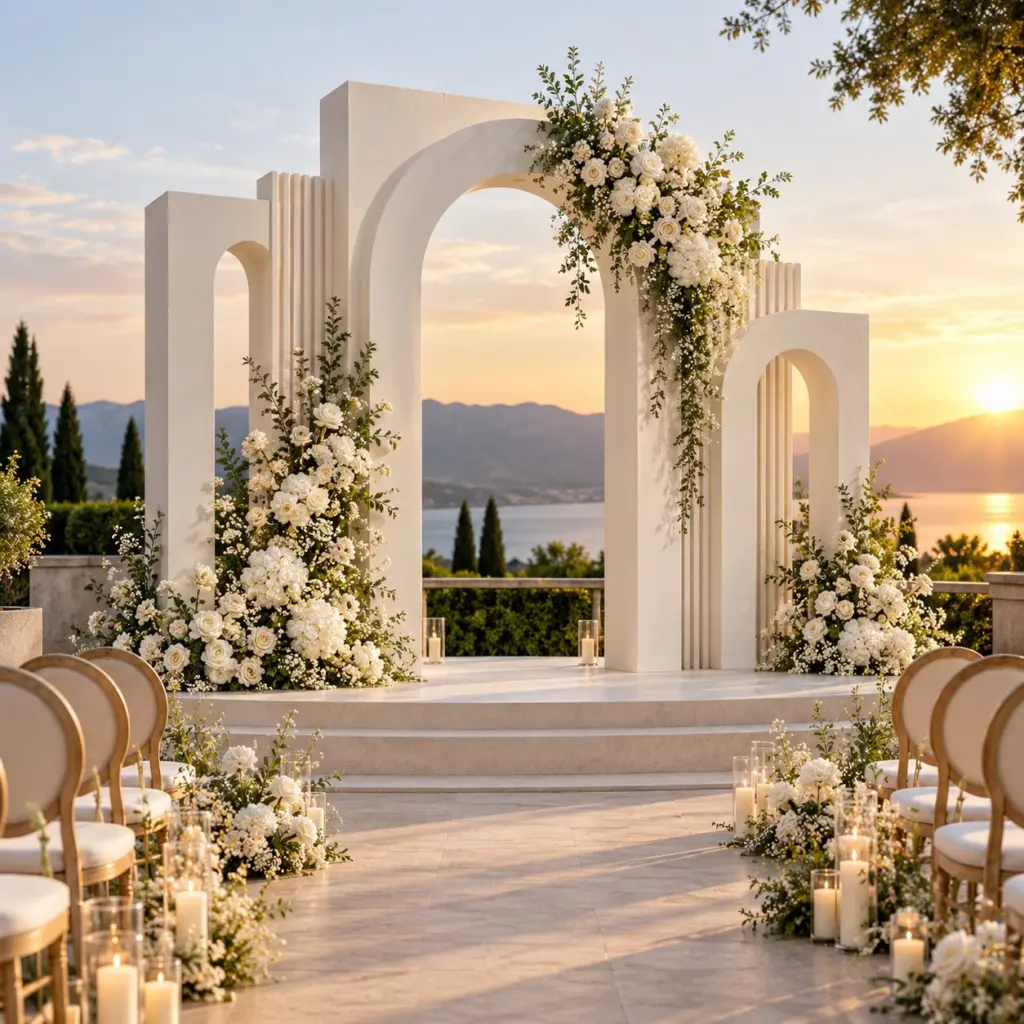
Wedding Arch Colonnades: Technical Fabrication for Luxury Ceremony Entrances, Aisle Architecture, and Event Spatial Design
See the results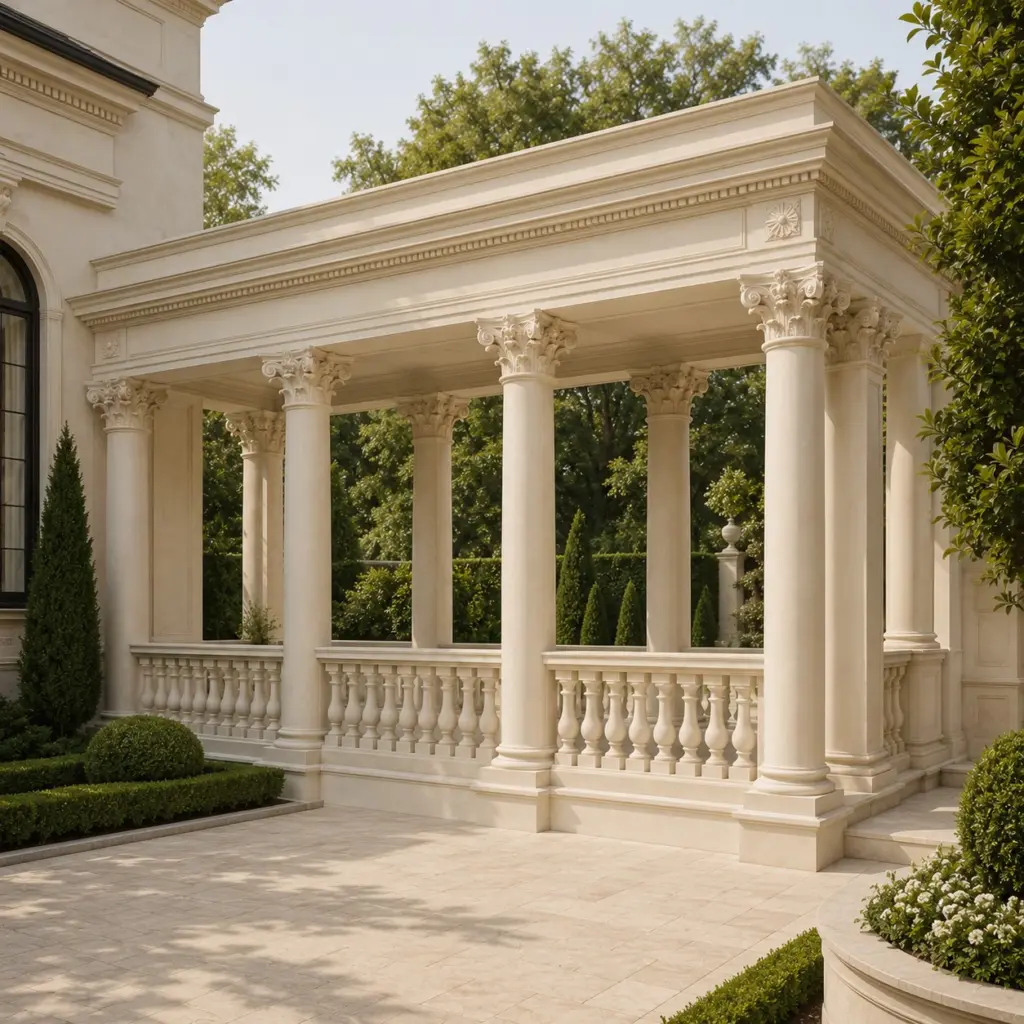
Architectural Shapes: Lightweight Custom Forms for Interiors, Exteriors, Homes, Buildings, and Branded Spaces
See the results
Foam Routed Signs: Precision-Cut Dimensional Signage for Lightweight, Custom, and Architectural Brand Environments
See the results
Foam Monument Signs: Lightweight Architectural Signage for Entrances, Campuses, Retail Plazas, and Brand Landmarks
See the results